Posted in Poems

Lucifer’s Confession

By: Bryan Ricardo Marini Quintana
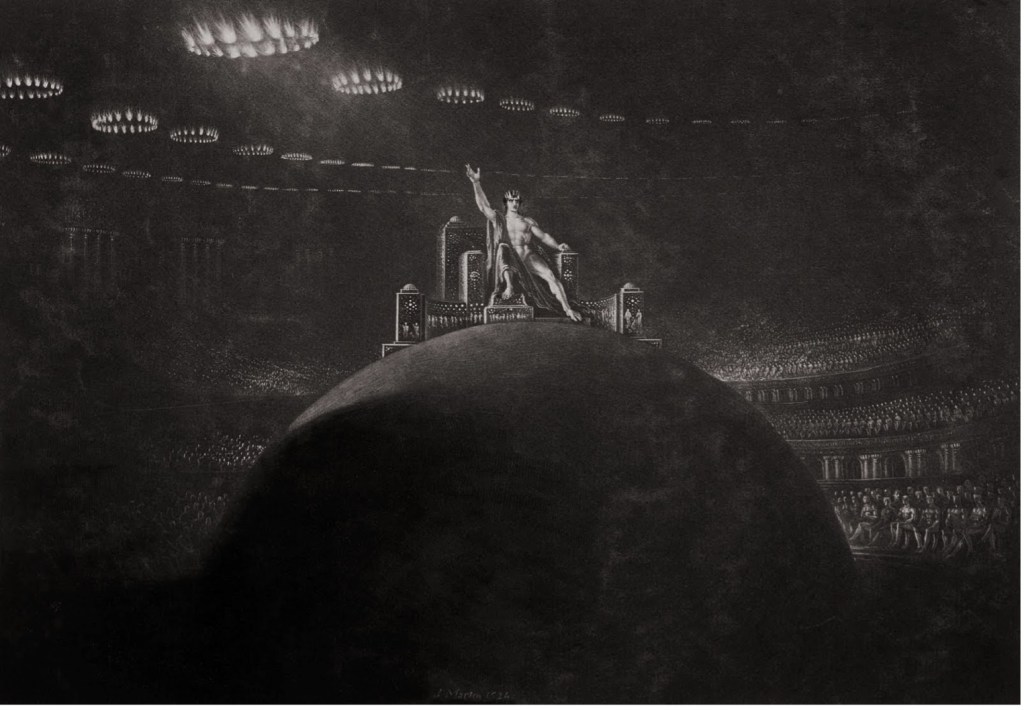
(John Martin, Satan Presiding at the Infernal Council, 1824)

Drums Drums Drums

Battering on the beat

Boots Boots Boots

Rolling on the route

Bats Bats Bats 

Hammering down the hall

Skulls Skulls Skulls

Parading down the pitfall

Numb Numb Numb

Their minds have gone

Fixed Fixed Fixed

Their bodies have gone

Cold Cold Cold

Their souls have gone

A Boom Boom Boom

Echoed in the Heavens

A Clap Clap Clap

Quivered in the Earth

A Thump Thump Thump 

Trembled in the Abyss

As the masses gathered to defy the Almighty Father

Clamoring in cries at their new master

With a self-proclaimed idol swaying them with fear and desire

Challenging the fallen angel’s proud power

Atop the Garden of Eden 

Met a serpent and a dove

By the Sapling of Knowledge

Rested Jehovah, awaiting to cast a stone

As Lucifer slithered upon the highest of boughs

He took a seat on the left side of The Lord

Consulting for the last time, as Satan asked God:

“What are thou waiting for?” before the breaking of the world

Heartbroken, Jehovah answered: “Once, I beheld thee to be mine wickedest creation.

Alas, mankind has surpassed thy dreadful deeds.” 

Thence Lucifer scoffed at this audacious proclamation

As Satan was offended that God’s children could contend with his foul feats

He went on to boastfully recount his every endeavor:

“I swayed Adam and Eve to take a bite from the fruit in thy tree.

I caused suffering to mankind by banishing them from the Garden of Eden.

I damned thy children with consciousness and nakedness to wither in disgrace.”

“I rebelled against thee for mine vain aspirations,

to oppose thine omniscient, omnipotent, and omnipresent order.

I wished to challenge thine indisputable reign over us,

to contest thy wisdom and knowledge as the sole creator.”

“For I, Father, coveted nothing else but to see thy seed crumble.

Mine Sin was rebelling against thy plans out of pride.

For I Jehovah, desired not to be lord of anyone.

Mine Sin was craving to see thy designs become undone.”

“Through Pride, Greed, Lust, and Envy,

I concocted perverted temptations to mislead thy children.

Through Wrath, Sloth, and Gluttony,

I boiled wicked enticements to dissuade mankind from finding purpose.”

Grief-stricken, Jehovah replied: “Thine heart darkened in this garden

when thou first slithered to tempt mine children.

Now upon the Sapling of Knowledge, thou avowed to sinning

by plaguing mankind with thy deceitful tongue that caused ceaseless suffering.”

“Thou enticed them to Sin with a false promise,

as Adam and Eve ate from mine Sacred Tree.

Thou influenced them, but there was a choice,

and they chose to disobey mine command.”

“For thou, mine friend, are an instrument bound

to test the will of mankind.

For thou, mine friend, are destined for treachery

to sway them with vices that forsake responsibility.”

“Thou must realize, mine Son, that their suffering has been self-imposed.

For I gave them life and purpose through me, but they disregarded mine command.

Even though I gifted them free will, Adam and Eve blamed thee when they erred.

Hence, I banished them from Paradise for heeding thy poisoned tongue.”

“Through Humility, Gratitude, Chastity, and Temperance

I am the way to cleanse thy soul from impure thoughts.

Through Patience, Charity, and Diligence

I am the way to mend thine heart from malignant actions.”

Thus, Jehovah raised his voice and proclaimed: “Behold mine labor Lucifer and despair!

For I’m incapable of recognizing mine own seed that brings forth this decay!

Their minds, bodies, and souls have been molded by a tyrant to be boundless and bare!

He twisted mine children who march blindly in columns and stretch far away!”

From the Garden of Eden, both gazed in horror upon the rally that humanity had ordained

Where the crowds worshiped neither Satan nor God but instead idolized a totalitarian state

At the helm, an ideologue didn’t envision chaotically burning the world

Devising stratagems for a new order to remake Earth with Heaven and Hell undone

Amidst the feast of crows festering for guidance

There ruled a demagogue on the podium, claiming his throne

Operating his marionettes through their fears and desires

By commanding them to think and act alike with the use of his threads

Although he swayed fanatics to keep him company

The tyrant stood alone, bereft of identity

With neither a Family to love

Nor a God to revere

With his scepter, the ideologue mustered legions

Incapable of preserving traditions to build a nation

Quelling the hearts of mothers and the wisdom of fathers

To rob the blissfulness of their children

Over in that Colosseum reigned a new demagogue

Who followed in the footsteps of Cleon and Alcibiades

By proclaiming himself Caesar of the People

To rule as Emperor of the rabble-rousers

Emulating Caligula, Nero, and Commodus

The tyrant employed their flamboyant theatrics

Flaunting the herd with seditious speeches

To erect an all-swallowing state disdainful of morals and values

Echoing Napoleon, Lenin, Stalin, and Hitler

A new ideologue roused his disciples with heated passions

Subduing them under maniacal delusions of grandeur

That have decimated bygone civilizations

Atop the Garden of Eden met a serpent and a dove

After Satan confessed, God beheld the demagogue

While Lucifer sneaked in fear that he would be deposed

Jehovah contemplated in sorrow if he should smite the stone

Drums Drums Drums

Battered on the beat

Boots Boots Boots

Rolled on the route

Bats Bats Bats 

Hammered down the hall

Skulls Skulls Skulls

Paraded down the pitfall
Posted in Library of Alexandria

What are the Christian Roots of Christmas? Part III: Dating the Crucifixion and Conception of Christ: How the Biblical Gospels and Historical Accounts Provide the Christian Roots for Christmas

By: Bryan Ricardo Marini Quintana

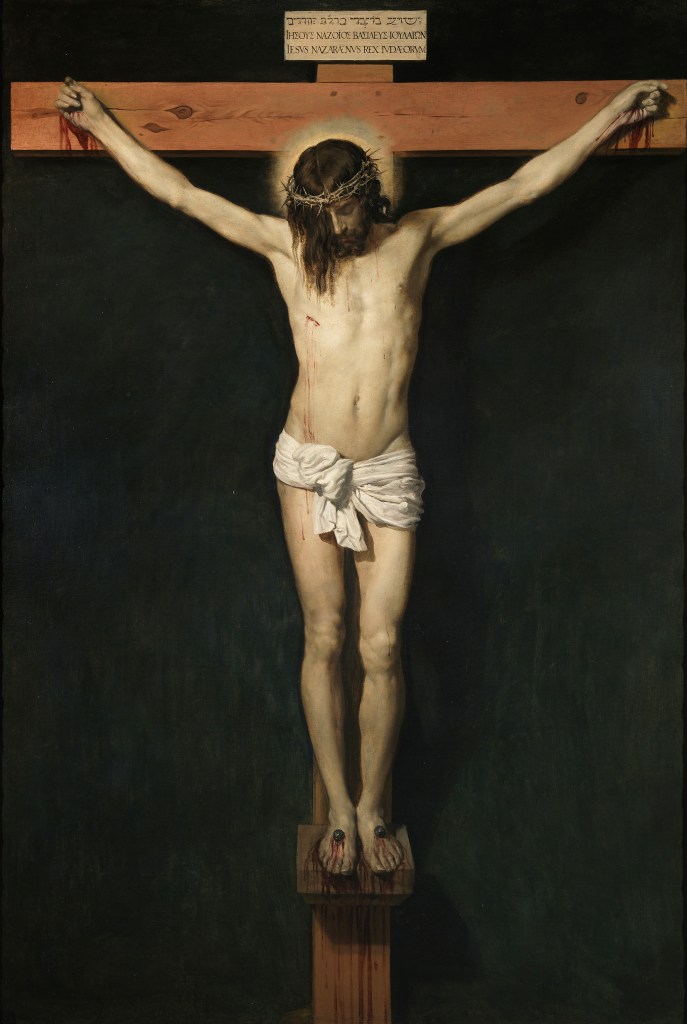
(Diego Velázquez, Christ Crucified, 1632)

The Gospels of Matthew, Mark, Luke, and John recorded the account of Christ’s Crucifixion in 33 AD during Passover around the late 60s AD at the earliest, until the early 100s AD at the latest, ranging across 40 to 70 years after Jesus’ Death, with this festival celebrating the Israelites’ Exodus from Egypt on the 15th of Nisan in the Jewish Calendar. Additionally, the Historians Cornelius Tacitus (56-120 AD) in The Annals and Flavius Josephus (37-100 AD) in The Antiquities of the Jews wrote external reports in the 1st and 2nd century AD from a Roman and Jewish perspective of the event. Firstly, Tacitus asserted in Book 15 that Christ was Crucified during the reign of Emperor Tiberius (42 BC-37 AD) between 14 to 37 AD and that the population referred to his followers as Christians, who Emperor Nero (37-68 AD) blamed for the Great Fire of Rome in 64 AD. Secondly, Josephus commented in Book 18 that Jesus declared himself the Messiah by achieving miraculous feats. Both resonate with the New Testament’s Gospels when these Historians mentioned Christ’s Crucifixion at the hands of Pontius Pilate, a governor of the Roman Province of Judea from 26 to 36 AD.

On one side, Matthew 27, Mark 15, and Luke 23 concurred that Jesus died on the 15th of Nisan, but John 19 stated instead the 14th, a day before Passover. Early Christians believed the 14th of Nisan corresponded with Christ’s Condemnation on the Cross, converting the date for the Julian Calendar (Introduced by Julius Caesar in 45 BC) into roughly March 25th. Correspondingly, the 14th or 15th of Nisan ranges from March to April 25th in the Gregorian Calendar (Reformed by Pope Gregory XIII in 1582 AD). Since Jesus was Crucified on a Friday near Passover around 33 AD, according to the Julian Calendar, the 15th of Nisan would correspond with the 3rd of April. However, in the Gregorian Calendar, the day would fall instead on the 7th of April. By identifying the Gospels’ dating and the Early Christians’ beliefs, the Messiah’s Death occurred on March 25th. When combining this with the Ancient Jewish Tradition of Prophets such as Moses fulfilling the ‘Integral Age,’ then Christ must’ve been Conceived the same day he was Crucified. This means that the Annunciation of the Angel Gabriel happened on March 25th, and Mother Mary bore God’s Son to give birth 9 months later, around December 25th. Overall, when accessing the New Testament’s Gospels, the Ancient Judeo-Christian Traditions, the Theologians of Early Christianity, and External Sources from Historians of the Period, the evidence concludes that Jesus’ Birthday is on December 25th.

Dear reader, enjoy the holidays with your families and remember to take some time off to commemorate the Birth of Christ. The Western Voyager wishes you a Merry Christmas, a Happy New Year, and a Cheery Feast of the Three Kings! Thank you for reading this Series on the Christian Roots of Christmas. To explore more research articles, make sure to visit the website and subscribe to the newsletter!

Posted in Library of Alexandria

What are the Christian Roots of Christmas? Part II: The Origins of December 25th: A Prophet’s Integral Age and Early Christian Theology

By: Bryan Ricardo Marini Quintana

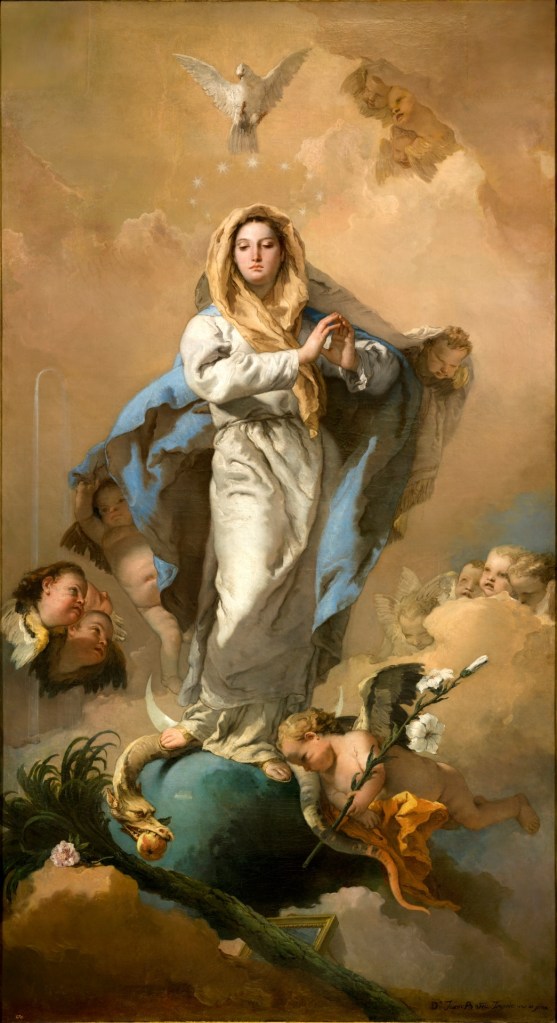
(Giovanni Battista Tiepolo, The Immaculate Conception, 1767-68)

Although neither of the Gospels provided a date for Christ’s Birth, in Ancient Judaism, there was a belief in a Prophet’s ‘Integral Age,’ where Holy Men who served God died on the day they were born, proposing an estimation for Jesus’ Conception. On the one hand, The Tanakh contains the Old Testament Books about the Law of Moses, the Prophets, and the Writings from the 12th to the 1st century BC with detailed family lineages but no concrete dating. However, The Talmud, an Ancient Text compiling the Oral Torah, where Jewish Scholars and Rabbis recorded their law and theology from the 3rd to the 6th century AD, cited that the Prophet Moses, who led them in Exodus out of Egypt, was born and died on the 7th of Adar as per their calendar. This belief in a Prophet’s ‘Integral Age’ persisted until Christ’s Birth, with the Early Christians deeming him the Son of God. Likewise, they considered him a Messianic Figure akin to Moses, and according to their customs, the Messiah died on the day he was born. This begs the question, when was Jesus Conceived and Crucified?

When consulting Early Christian Theologians from the 2nd to the 5th century AD, numerous historians, authors, bishops, and philosophers who lived during the Decline of the Roman Empire agreed that Christ’s Birth was on December 25th. Firstly, the Historian Sextus Julius Africanus (160-240 AD) wrote Chronographai, a five-volume treatise outlining the Chronology of World History where he calculated, from reading the Gospels of Luke and Matthew, that Jesus must’ve been conceived on March 25th, adding 9 months to conclude that the Messiah was born on December 25th. Furthermore, the Author Tertullian (160-240 AD) composed a foundational work for the Early Church Doctrine with Adversus Judaeos, stating that Christ must’ve died on the Cross during Passover, precisely 8 days before the Calends of April, subtracting that number to arrive at March 25th. Thereafter, the Bishop Hippolytus (170-235 AD) penned a Commentary on Daniel where he interpreted his deeds and visions, commenting that Jesus must’ve been born around 8 days before the Calends of January, landing between either December 24th or 25th. Additionally, the Philosopher Saint Augustine of Hippo (354-430 AD) echoed the profound belief and academic research of his predecessors with De Trinitate by affirming the Christian Tradition of Christ’s Conception on March 25th, the same day he was Crucified, settling on his Birth as December 25th. Therefore, these Early Christian Theologians concluded that Jesus died on March 25th and was born on December 25th, with Sextus Julius Africanus, Tertullian, and Hippolytus writing in the centuries when the Roman Empire outlawed their faith until the Edict of Milan by Emperor Constantine (272-337 AD), who converted and legalized their religion in 313 AD, while Saint Augustine of Hippo lived through a time of transition in which paganism prevailed.

When combining the Hebrews’ Ancient Beliefs of the ‘Integral Age’ of their Prophets alongside the Early Christian Theologians who meticulously calculated through scripture that the Crucifixion occurred around Passover on March 25th, then their estimations would suitably place Jesus’ Conception on the same date, only adding 9 months to land on December 25th. Nevertheless, how can one be certain about the accurate dating of Christ’s Death, and are there any External Historical Sources that support the Gospels? We’ll explore this in the final post!

Posted in Library of Alexandria

What are the Christian Roots of Christmas? Part I: The Christmas Tradition: What do the Gospels record about Jesus’ Birth?

By: Bryan Ricardo Marini Quintana

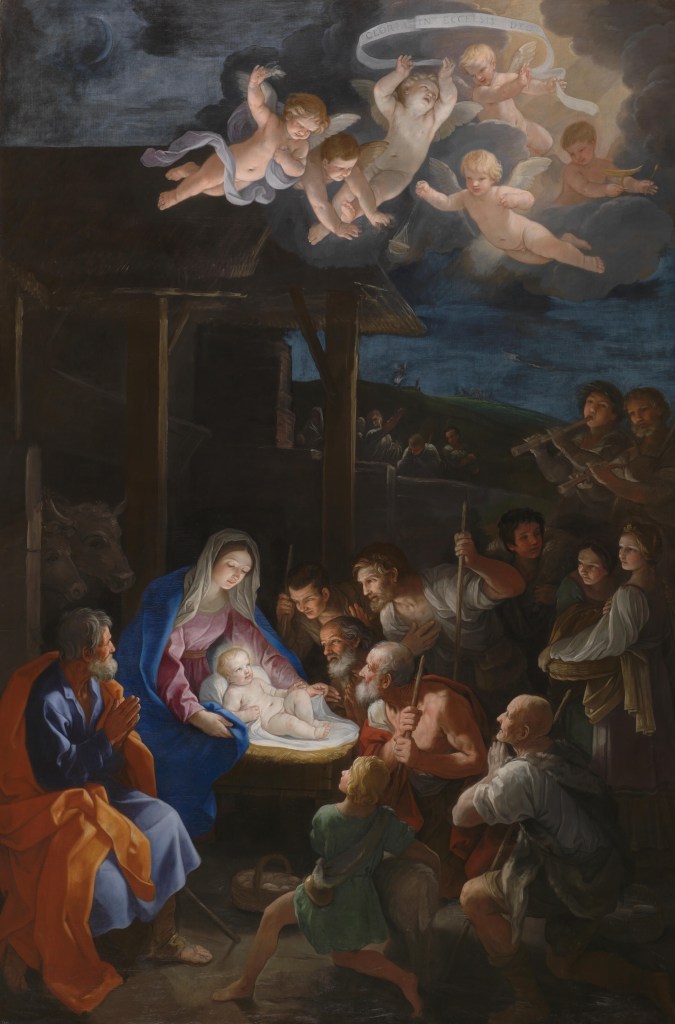
(Guido Reni, The Adoration of the Shepherds, 1640)

Every December 25th, families gather around the Christmas Tree, waiting for Santa Claus to slide down the chimney with gifts. Around the neighborhood, each house has jolly decorations, holiday music, and delicious food. But everyone is easily distracted by the haste of senseless spending, extravagant adornments, and numerous festivities. Often, people tend to forget why Christmas is celebrated on December 25th. This Christian Tradition commemorates the Birth of Christ on the day God begot his Son, who became a Man to fulfill his role as the Messiah. Why do Christians believe that the Birth of Jesus was on December 25th?

In the Gospels of Luke 1 and Matthew 1, the Angel Gabriel delivered his Annunciation to the Virgin Mary, revealing that she would bear the Son of God through the Holy Spirit, with Joseph of Nazareth receiving a divine message to marry her and care for the boy. Both Gospels affirmed that Mary conceived through Divine Conception and gave Birth to Christ in Bethlehem. They also recognized Joseph as a descendant from the House of David, who traced back his ancestors to the days of Abraham’s First Covenant, proclaiming Jesus as a progeny from the Kingdom of Jerusalem. The Messiah was most likely born in a lowly abode, where Luke 2 recounted that he was placed in a small manger, a wooden frame used to feed animals, and visited by shepherds, symbolizing his humble roots. Moreover, Matthew 2 narrated how The Magi, otherwise referred to as The Three Wise Men or Kings, traveled to Bethlehem offering gifts of gold (A Treasure of Kingship), frankincense (A Resin for Incense to denote Worship), and myrrh (An Oil for Mourning).

While the Gospels discuss Mary’s Divine Conception, Joseph’s Kingly Lineage, Christ’s Birthplace, alongside the Shepherds and Magi’s adoration of the newborn, they don’t mention any date. To discover the origins of why December 25th was chosen as Jesus’ Birthday, one must consult the Hebrews’ Ancient Beliefs and Early Christian Theologians. We’ll explore this in the next post!

Posted in Poems

A Traveller’s Guide To Judea

By: Bryan Ricardo Marini Quintana

(Salvador Dalí, Christ of Saint John of the Cross, 1951)

Where does a Sailor land ashore,

When he has lost sight of his course?

Nowhere else but upon those Western Shores!

He hears the Angel’s cry for Abraham to spare his Youngster,

Whose offspring reach the Land of Pharaohs, where a Bush kindles,

And speaks unto Moses to split the Red Sea and free His People!

He traces them with the Ten Commandments for years on end until forty,

When the Lord delivers them to a Holy Land, flowing with milk and honey,

After the Fall of Israel, a Messiah is born in the days of Herod, as God’s progeny!

Across Jerusalem, Jesus gathers twelve to spread his Gospel, 

While a Sailor muses to love thy Lord above all and thy brethren as thyself,

Following Christ’s footsteps as he performs miracles and challenges those Pharisees!

Atop Golgotha Hill, He’s Crucified to Resurrect after days on end until three, 

From whence his values spread from Constantine to Charlemagne,

Until that Sailor found a meaningful passage with the Cross from the West!