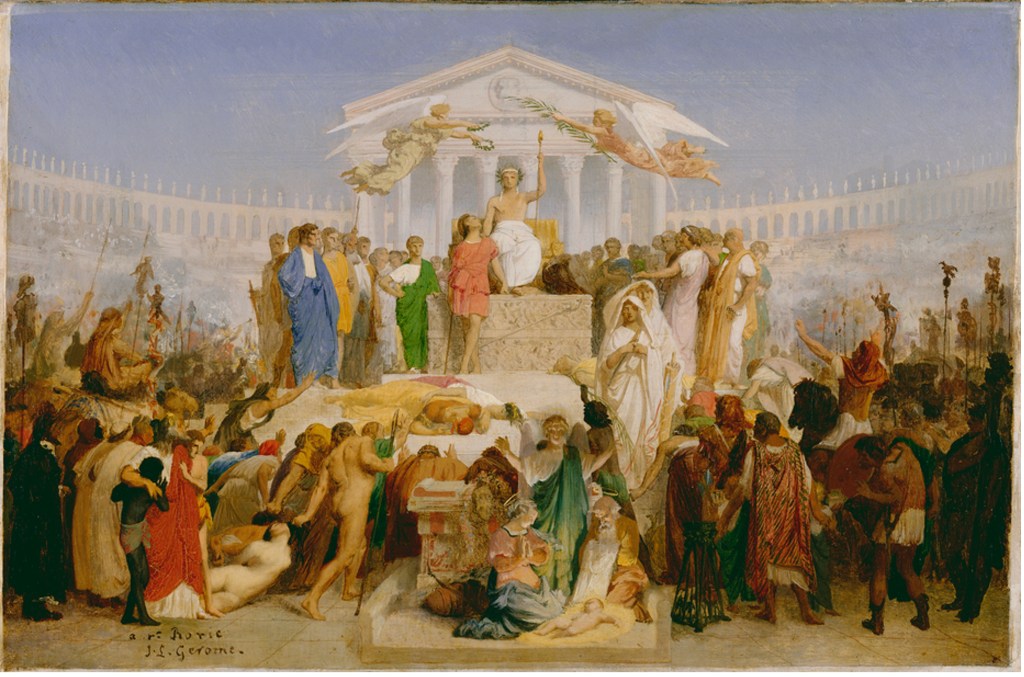
(Jean-Léon Gérôme, The Age of Augustus, the Birth of Christ, 1852-1854)
If you’ve browsed a book or two recently, you’ve likely noticed a curious detail whenever there’s a historical date. Instead of the usual BC and AD after the year, it’s been changed to BCE and CE. But what are these ‘new’ terminologies? And why are they replacing a ‘dated’ lexicon? Lately, there has been a tendency for institutions to ‘modernize’ fields such as history by replacing BC (Before Christ) and AD (Anno Domini) with a socially ‘inclusive’ BCE (Before The Common Era) and CE (The Common Era). Historians continue to challenge long-held perceptions, with their discoveries constantly shifting the academic field’s understanding of the ancient world. They’re responsible for reconstructing historical narratives that faithfully preserve the past, despite personal biases. However, texts and articles have currently opted to separate historical periods into the ‘enlightened’ BCE and CE, over the ‘traditional’ BC and AD.
Why has academia substituted Christ with the Common Era? Have scholars found a revolutionary method to measure the Earth’s Orbit? Or could this sudden revision be a modernist attempt to erase Christianity from History? Ironically, the Birth of Christ divides both periods, even though they use different terminologies. What is the point of changing the lexicon if the same historical event separates them? These questions can be answered by investigating the remarkable innovations of the Ancient Romans and Medieval Priests who designed the Julian and Gregorian Calendars, along with exploring the origins of BC and AD to determine whether BCE and CE are justified in removing this religious language.
In 49 BC, the die was cast, and Julius Caesar Crossed the Rubicon, dragging the Roman Republic into a Civil War that would rout his rivals and usher in his rise as Dictator of Rome. During his short-lived reign, Pliny the Elder, a Roman author, narrates in his ‘Natural History’ (77 AD) that Caesar’s reforms were aimed at legitimizing his ascension, working with Sosigenes, a Greek astronomer who advised him to amend the Old Roman Calendar. While studying in the Library of Alexandria, Sosigenes deduced that the Ancient Egyptians had accurately recorded the days of the year since the Old Kingdom. Due to the cyclical flooding of the Nile River Valley, they calculated that there were an estimated 365 days a year. Once Caesar landed in Ptolemaic Egypt around 48 BC, he met Sosigenes while having an affair with Cleopatra VII. They reformed the Lunar Calendar, based on the moon’s phases, into a Solar Calendar, aligned with the Earth’s Orbit around the sun. This was the foundation for the Modern-Day Calendar, with 365.25 days a year and a leap year of 366 days every four years to stay in sync with the Earth’s Orbit.
Macrobius, a Roman writer, recounts in ‘Saturnalia’ (431 AD) how the Old Roman Calendar was used one last time around 46 BC, during a transitional phase known as ‘The Year of Confusion.’ A momentary extension of 445 days was made for the year to adjust from a Lunar to a Solar Calendar. Then, Caesar and Sosigenes officially introduced the Julian Calendar in 45 BC. An additional 10 days and 2 months were added to the original 355 days and 10 months per year. Suddenly, the Senate conspired against their Dictator, assassinating him on March 15, 44 BC. But their coup failed, and posthumously deified Caesar under the title of ‘Divus Iulius’ (Divine Julius). And to honor his birthday, the month of ‘Quintilis’ (Fifth) was renamed ‘Julius’ (July). Amidst the chaos, Octavian triumphed as Caesar’s heir, soundly defeating the Dictator’s murderers and allies to become Caesar Augustus, the First Roman Emperor. He authorized adjustments to the Julian Calendar between 9 and 8 BC, legitimizing his predecessor’s labor. Similarly, the Senate honored the month of ‘Sextilis’ (Sixth) to ‘Augustus’ (August). Nevertheless, a slight miscalculation led to an inaccuracy in the Julian Calendar, causing a gradual drift from 45 BC to 1582 AD.
Since the Republic, Roman historians such as Livy based the dating system in ‘Ad Urbe Condita’ (27-9 BC) around whichever two men held office as consuls in the Senate, naming the year after them. Thereafter, regnal years gained popularity, bearing the name of the current Emperor. Alternatively, the calendar was measured with ‘Ad Urbe Condita’ (From the Founding of the City), counting years since Romulus founded Rome in 753 BC. During Emperor Diocletian’s Tetrarchy (293-305 AD), the reign of the four emperors was known as the Diocletian Era, Latin for “Anno Diocletiani” (The Year of Diocletian). These years were characterized by the ‘Diocletianic Persecution’ of Christians, with the Coptic Church of Alexandria calling it instead the ‘Era of Martyrs.’ Once Diocletian stepped down, Constantine emerged victorious from the Civil Wars of the Tetrarchy (306-324 AD), reunifying a fractured Roman Empire. Upon the eve of Battle at the Milvian Bridge, he received a vision of Christ’s Cross. And in the Lord’s Sign, Emperor Constantine conquered, legalizing Christianity. Furthermore, the Edict of Milan (313 AD) granted religious freedom to Christians, while the Council of Nicaea (325 AD) affirmed the Divinity of Christ, thereby ending centuries of brutal oppression.
Afterward, Dionysius Exiguus of Alexandria, a translator and astronomer, used the Julian Calendar in the 6th century as a framework to create a new system for numbering years. In 525 AD, the Christian Monk published his ‘Liber de Paschate Praefatio’ (Book on Easter Reckoning), introducing the concept of a Christian Era based around the Incarnation of Jesus Christ. This replaced the heretical ‘Era of Martyrs’ with ‘Anno Domini nostri Jesu Christi’ (In the Year of Our Lord Jesus Christ). Later on, Saint Bede, an English Monk, wrote the ‘Ecclesiastical History of the People of England’ in 731 AD. The medieval manuscript narrated events from Roman to Anglo-Saxon Britain, tracing the chronicles of the Early Church. Essentially, this historian and theologian documented Britain’s history with the popularized use of ‘Ante Christi natum’ (Before the Birth of Christ). Through these Monks, the consular years, regnal years, and ‘Ad Urbe Condita’ were rechristened to record historical periods before and after the Incarnation of ‘Jesu Christi.’
Over the centuries, Christian Festivals fell out of season due to a miscalculation traced back to Sosigenes and Caesar, who erroneously assumed that the solar year had 365.25 days. In reality, Earth’s Orbit around the sun takes 365.2564 days, which may seem like a minor slip-up if it weren’t for the millennium that had come and gone, misaligning the seasons. The Old Julian Calendar’s seasonal dates had regressed by roughly a day every century. Next, Aloysius Lilius, an Italian astronomer, chronologist, and philosopher, proposed in 1577 a reformation with his ‘Compendium novae rationis restituendi kalendarium’ (Compendium of a New Plan for the Restitution of the Calendar). He counseled that the ‘Leap Year Rule’ had to be modified to align the seasons with the solar year precisely. Previously, a leap year added an extra day to the Old Julian Calendar every four years to account for the quarter of a day that had accumulated over the last three years. His proposition revised the principle that every year divisible by four was considered a leap year. Instead, Aloysius Lilius engineered a dating system in which century years ending in ‘00’ would not be considered leap years unless they were divisible by 400. For example, 800 AD would be a leap year, but centuries like 500-700 AD could not qualify. These modifications ensured that the New Calendar would remain synchronized alongside the seasons, with 97 leap years every 400 years.
All of this previous research prompted Pope Gregory XIII to announce the papal bull ‘Inter gravissimas’ (In the gravest concerns) on February 24, 1582, calling for the reformation of the Old Julian Calendar. Back in 1579, Christopher Clavius, a German mathematician and astronomer, began implementing this commission with the Gregorian Calendar. He built upon Aloysius Lilius’ work and refined the ‘Leap Year Rule,’ discovering a discrepancy of 10 days caused by the Previous Calendar’s gradual drift. To properly align the New Calendar with the Solar Year, Pope Gregory XIII decreed that, after October 5th, 1582, the following day would be the 15th. Each contribution was made by Jesuit Priests who addressed the realignment of the calendar while honoring the legacy of their ancestors, preserving the months of July and August, alongside the traditional use of BC and AD.
This raises the central question: Why has academia substituted the terminology of BC and AD with BCE and CE, if they’re both divided by the Birth of Christ? Have scholars developed innovative measurements for the Earth’s Orbit? Or is the postmodernist lens deconstructing ancient traditions by rephrasing the cultural memory of the past? Basically, BCE and CE stand for ‘Before the Common Era’ and ‘Common Era,’ coining a new lexicon that removes Christianity from History through a secular approach to separate these periods. The intent is to adopt a non-biased stance when conducting scholarly research, setting aside a dating system that is associated with a religious figure (Jesus Christ) to maintain academic neutrality. However, this is done at the expense of taking away recognition from Christian Monks and Jesuit Priests who wrote historical records and accurately calculated the Earth’s Orbit. If the argument is about objectivity in the field, why do July and August still have the names of the Caesars? Wouldn’t their persistent use expose political favoritism with the Roman Senate, a Dictator, or an Emperor? This is, of course, a ludicrous statement, since Rome fell in 476 AD, more than 1,500 years ago, and its governmental institutions have lost all relevance. Nevertheless, the names of Julius and Augustus have remained intact for these months, without any controversy, recognizing their roles in reforming the Julian Calendar.
On another note, there’s a case to be made for the pagan origins of the days of the week that trace back to Greco-Roman and Norse-Germanic Mythology. In Dio Cassius’ ‘Historia Romana’ (233 AD), the historian discusses the Roman Planetary Week, with each day named after a celestial body that represented a god. Sunday and Monday were ‘Sol’ (Sun) and ‘Luna’ (Moon), while Tuesday, Wednesday, Thursday, Friday, and Saturday were Mars, Mercury, Jupiter, Venus, and Saturn. But these were replaced by the Norse-Germanic Peoples, with Snorri’s ‘Edda’ (1220 AD) narrating a body of myths and legends that includes names of the week, which were changed to reflect their traditional beliefs. Thus, ‘Sól’s day’ and ‘Mani’s day’ became Sunday and Monday, while Tyr’s day, Wotan’s (Odin’s) day, Thor’s day, and Freyja’s day became Tuesday, Wednesday, Thursday, and Friday. All save one Roman god lingered on as Saturn’s day (Saturday). Although academia has replaced BC and AD to preserve ‘academic integrity’ on the issue of Jesus Christ, none of these pagan gods have been scrutinized, posing questions about whether there’s a double standard in a dating system that also, ironically, uses religious figures for the days of the week.
The Legacy of the Ancient Romans and Medieval Priests still lives on in the Modern-Day Calendar, with their contributions ranging from Sosigenes’ designs, Caesar’s and Augustus’ implementations, to Saint Dionysius’ and Bede’s transcriptions, alongside Aloysius Lilius’ and Christopher Clavius’ calculations that cemented the traditional use of BC and AD. Unlike the achievements mentioned above, no subsequent scholar has proposed a ‘modern’ revision of the Calendar that offers a groundbreaking discovery. Regrettably, the historical figure of Jesus Christ has been subjected to constant critical examination. Meanwhile, July and August continue to honor the Ancient Romans, while the days of the week sustain the cultural memory of the Old Norse gods. Throughout antiquity, individuals such as Abraham, Alexander, and Augustus left their mark on history, with the Patriarchal Age, the Hellenistic Period, and the Augustan Age, which were named after them due to their defining roles. Undoubtedly, Jesus Christ had a profound cultural impact on the world with his Birth, Preachings, Miracles, Crucifixion, and Resurrection. The Messiah’s Disciples spread the Gospel that Converted the Roman World, stretching across Europe, Africa, and Asia, from Paganism to Christianity. His Teachings shaped Western Civilization, influencing its history, philosophy, laws, values, and art. Both the Ancient Romans and Medieval Priests merit equal recognition for their achievements in preserving historical accounts and constructing the Modern-Day Calendar. They composed the Julian and Gregorian Calendars around a dating system that represented their Faith in Christ with ‘Ante Christi natum’ and ‘Anno Domini nostri Jesu Christi’ through the fields of astronomy, mathematics, theology, and history. Ultimately, the issue of whether BCE and CE are justified in replacing this religious language can be answered with a simple question. What pivotal event divides BCE and CE? Nothing less than the Incarnation of the Lord ‘Jesu Christi.’
In the aftermath of Marcus Aurelius’ assassination, Maximus is seized as a traitor and sentenced to die for refusing to recognize the new Emperor. He escapes from the Praetorian Guard only to find the torched corpses of his family, who’ve been hanged on Commodus’ orders. Then, he succumbs to his wounds and is taken as a slave to the deserts of North Africa, where a master named Proximo buys him to make profits in the gladiatorial games. Initially, the Gladiator declines to become his fighter and win him riches while he suffers to entertain the masses. In the arena, the crowd exalts Maximus, but he neglects their adoration by throwing his sword at them after winning and exclaims in mockery: “Are you not entertained? Are you not entertained? Is this not why you are here?” (Gladiator 2000) Proximo is frustrated with his Gladiator, who constantly lashes out at the mob. Meanwhile, he yearns to reach the heights of Rome, where he can gain fame and glory in the Colosseum. In their conversation, Proximo tells Maximus that he once was a gladiator who earned his freedom by winning the masses, with Marcus Aurelius freeing him from the arena. Then, he asks his Gladiator what he wants, offering him riches and pleasure. But Maximus answers that he also wishes to stand before the Emperor as he once did. At last, Proximo imparts wise words to Maximus when they depart to Rome for the Colosseum by counseling: “Listen to me. Learn from me. I was not the best because I killed quickly. I was the best because the crowd loved me. Win the crowd and you will win your freedom.” (Gladiator 2000)
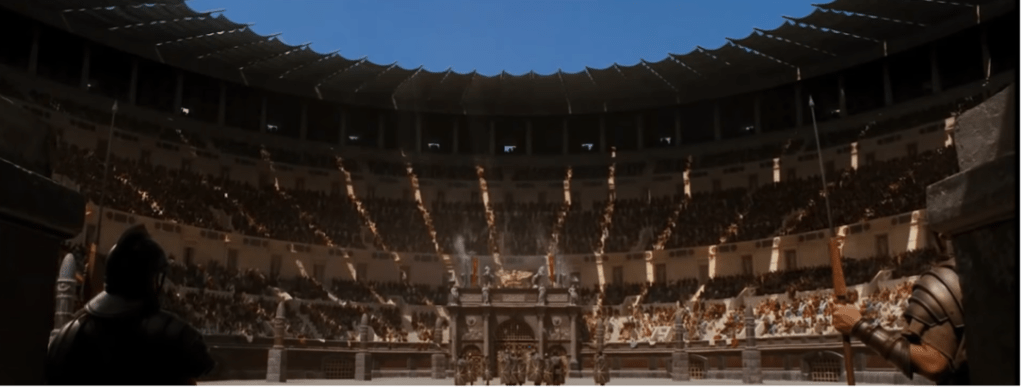
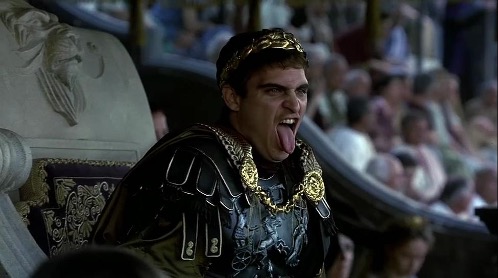
In the packed streets of Rome, Senator Gracchus observes the crowd rushing in to fill the massive amphitheater, knowing the Emperor’s malicious motives as he scorns to a fellow statesman: “I think he knows what Rome is. Rome is the mob. Conjure magic for them and they’ll be distracted. Take away their freedom and still they’ll roar. The beating heart of Rome is not the marble of the senate, it’s the sand of the Colosseum. He’ll bring them death and they will love him for it.” (Gladiator 2000) This ill omen sets the stage for Commodus’ designs to possess the mob’s adoration through flamboyant theatrics, crumbs of bread, and drops of wine. At the heart of the Roman Empire stands the Colosseum, casting a vast shadow over the masses who clamor for entertainment to distract themselves from their daily lives. The Emperor sits on his lavish throne alongside Lucilla and Lucius, observing the gladiators slaughter each other for his amusement. From the pits below emerges Maximus in the arena, ready to give the crowd a performance to remember.
Gladiator, directed by Ridley Scott
When the battle begins, Proximo realizes he’s been fooled, with the Gladiator and his warriors recreating the Battle of Zama. However, they’re playing the losing role of the Carthaginians against the Romans. Their fortunes are reversed when Maximus assumes command and reorganizes them akin to his Legionaries, forming a defensive ring with their shields. Although their opponents assail them atop their chariots, the Gladiator manages to knock down a few riders. This turns the odds as Maximus mounts a horse and scatters his foes into a humiliating retreat, with the mob cheering at the Carthaginians instead of the Romans.
All the while, the Emperor relishes this carnage in a hedonistic fashion, savoring the esteemed bravado of this Gladiator and demanding to meet him. He asks for his name, but Maximus boldly says: “My name is Gladiator.”(Gladiator 2000) Straightaway, he turns his back on him, and Commodus furiously demands: “How dare you show your back to me? Slave! You will remove your helmet and tell me your name.” (Gladiator 2000) Then, Maximus reveals his true identity by defiantly responding: “My name is Maximus Decimus Meridius, Commander of the Armies of the North, General of the Felix Legions and loyal servant to the True Emperor, Marcus Aurelius. Father to a murdered son, husband to a murdered wife. And I will have my vengeance, in this life or the next.” (Gladiator 2000) For an instant, the Emperor is tempted to slay him in the Colosseum, ordering his Praetorian Guard to take an offensive stance, but the masses loudly chant: “Live, live, live!” (Gladiator 2000) Irrevocably, Commodus sees that he has lost dominion over the crowd and goes against his very wishes to execute him, forcefully giving in to their demands by granting Maximus’ life, who claims their acclamation as he descends into the pits where gladiators ecstatically repeat: “Maximus, Maximus, Maximus!” (Gladiator 2000)
Gladiator, directed by Ridley Scott
Once the match ends, Lucilla looks for this Gladiator in the pits of the arena, imploring him to save Lucius’ life and secure Rome’s fate. Initially, Maximus ignores her appeal and yields instead to his cruel fortune as a slave who’s only set loose for sport. Yet she reveals to him how he has humiliated the Emperor while simultaneously winning the mob’s favor by asserting: “Today I saw a slave become more powerful than the Emperor of Rome.” (Gladiator 2000) This prompts the Gladiator to sympathize with Lucilla’s cause, using his power to sway the masses and devise a plot to rout Commodus. Concurrently, the Emperor orchestrates a second round of gladiatorial games where Maximus will face a legendary fighter, the Tigris of Gaul. The arena has been riddled with trap doors and wild animals, pitting all odds against him. All of this serves as Commodus’ grand spectacle, where he can have the idol of the Colosseum killed in full view of the crowd. The Gladiator beats the Emperor’s champion as the mob shouts for his execution. Then, Maximus beholds Commodus with an audacious gaze while he turns his thumb down, ordering him to execute the fallen opponent. Once again, the Emperor’s authority is mocked when the Gladiator casts down his axe to show mercy, with the masses praising him as a merciful warrior.
Late in the night, Lucilla and Senator Gracchus free Maximus while his fellow gladiators delay the Praetorian Guard, but they’re all captured by Commodus, who arranges a final gladiatorial game. He holds his sister and nephew hostage inside a marble palace, mourning her betrayal. Furthermore, the Emperor envies the Gladiator when he deduces that Lucilla has freely given him the warmth he’s always longed for. Suddenly, she agonizes over Lucius’ life, with Commodus using her son as bait, threatening to injure him if Lucilla doesn’t submit herself to his lustful fixation when he commands: “Lucius will stay with me now. And if his mother so much as looks at me in a manner that displeases me, he will die. If she decides to be noble and takes her own life, he will die.” (Gladiator 2000) When the Emperor is unable to have his father’s love, his sister’s affection, or the crowd’s adoration, he coerces them into worshipping him, attempting to emulate their admiration for Maximus as he terrifies Lucilla by demanding: “And as for you, you will love me as I loved you. You will provide me with an heir of pure blood, so that Commodus and his progeny will rule for a thousand years. Am I not merciful? Am I not merciful!”(Gladiator 2000)
Gladiator, directed by Ridley Scott
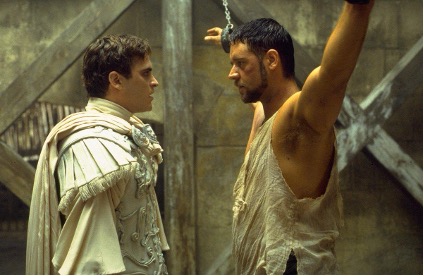
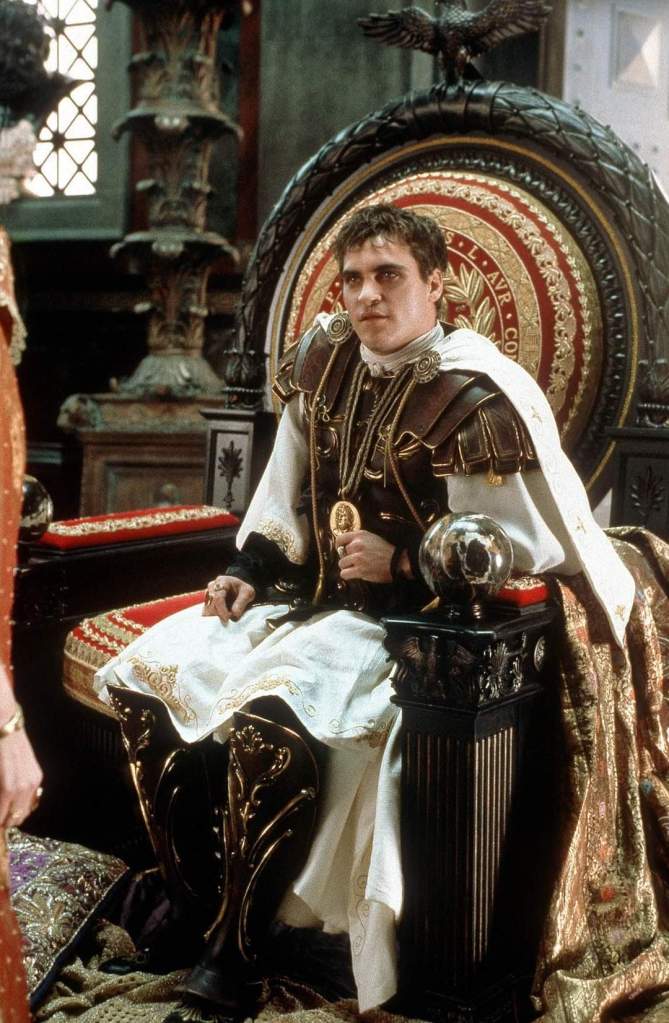
Below the arena, Commodus adorns himself akin to a God-Emperor with extravagant armor tainted in pure white. He leaves the Gladiator chained in his poor garb, facing him to boast: “The general who became a slave. The slave who became a gladiator. The gladiator who defied an emperor. Striking story! But now, the people want to know how the story ends. Only a famous death will do. And what could be more glorious than to challenge the Emperor himself in the great arena?” (Gladiator 2000) Although Maximus lies at his mercy, he doesn’t fear Commodus, as he evokes the memory of Marcus Aurelius by recalling: “I knew a man once who said, “Death smiles at us all. All a man can do is smile back.” (Gladiator 2000) This posture shows that the Gladiator is ready to die and avenge his family, longing to join them in the afterlife. Before departing, he remembers his promise to Marcus Aurelius when he vowed to restore power to the Senate and the People of Rome. After hearing his speech, the Emperor indirectly admits to committing patricide by answering: “I wonder, did your friend smile at his own death?” (Gladiator 2000) Although this confession is directed as an insult, Maximus quickly quips back: “You must know. He was your father.” (Gladiator 2000) This way, the Gladiator lets him implicitly know that he’s aware of his foul deed done out of jealousy for not being his father’s favorite. Thereafter, Commodus stabs Maximus to leave him wounded for the coming battle and ensure his victory in front of the mob while professing: “You loved my father, I know. But so did I. That makes us brothers, doesn’t it? Smile for me now, brother.” (Gladiator 2000) Conclusively, the arena floor opens as they’re raised to the top while red petals grandiosely fall from the heavens, delivering one last spectacle to the roaring masses.
In the beating heart of Rome, a Slave challenges the Emperor to a gladiatorial game, where the crowd will witness the death of their hero as they praise their new champion. When they enter the Colosseum, Commodus salutes the mob while the Praetorian Guard surrounds Maximus in the arena as he bleeds out. While the Emperor takes an offensive stance, the Gladiator assumes a defensive posture, countering his every move. Commodus’ repeated attacks drain him, as Maximus gains the upper hand when he knocks him down. In retaliation, the Emperor franticly swings his blade until he lands a blow on his legs. The Gladiator catches him by clasping his arm and knocking off his sword. But he succumbs to his injuries and sees a vision of his family calling to him. At that moment, Commodus hastily orders his loyal sentries to give him a blade, yet they disregard him, shielding their swords. Regardless, he pulls out a hidden knife to strike him while he’s vulnerable. Maximus deals heavy blows and turns the dagger against him, stabbing the Emperor in the neck with his own hand. Thereafter, Lucilla comforts him as the Gladiator reassures her that Lucius is safe. She gives Maximus a final blessing before he departs this world, allowing him to be reunited with his wife and son. When he passes away, his fellow fighters honor him by lifting the Gladiator’s body and carrying him out of the Colosseum. Simultaneously, Commodus’ corpse is left to rot alongside his schemes, dying alone without a father, a maiden, or the masses to mourn him. In the end, Maximus fulfills his duty to Marcus Aurelius by protecting Rome, keeping his promise to save Lucilla’s son, and avenging his family by slaying the Emperor to find rest in the fields of Elysium.
Gladiator, directed by Ridley Scott
Works Cited:
Gladiator.
Directed by Ridley Scott, Dreamworks Distribution, 2000.
Early on, Lucilla travels alongside Commodus to visit their father, feeding her brother’s egomaniacal aspirations of becoming Emperor as she is incidentally imprisoned by his obsessive devotion to her. At the feast, Commodus intimidates Maximus by implying that he’ll call him to serve Rome again, mentioning how his sister still remembers him fondly when he shares in a jealous tone: “Lucilla’s here, did you know? She’s not forgotten you, and now you’re the great man.” (Gladiator 2000) Meanwhile, Lucilla sneakily glimpses at the festivities, intently watching the General when Marcus Aurelius catches her and gladly comments: “If only you had been born a man, what a Caesar you would’ve made.” (Gladiator 2000) They proceed to kiss on the cheek, with the Emperor testing her similarly as he does with Maximus by adding: “You would’ve been strong. I wonder, would you have been just?” (Gladiator 2000) Lucilla rightfully answers: “I would’ve been what you taught me to be.” (Gladiator 2000) Altogether, the conversation shows how they speak earnestly and embrace each other lovingly with an esteem of mutual respect. Finally, Marcus Aurelius smiles at her, proud of the astute woman he’s raised, while rejoicing in the company of his lovely daughter.
Later, Lucilla reunites with Maximus, goading him about her luxurious life in the marble palaces of Rome ever since he was mustered to fight far away in the Roman Frontier. Despite their long absence, an old flame still sparks between them. They demonstrate a sense of duty and paternal love to protect their children, which binds these estranged souls together again. Soon, news reaches Lucilla about her father’s death, and she straightaway rushes to read her brother’s face, reasoning from his cold demeanor that he is responsible for this foul deed. She slaps him in a fit of grief and anger but realizes that Maximus has been sentenced to suffer the same fate. Subsequently, Lucilla succumbs to Commodus and recognizes him as Emperor while she plots to restrain her brother’s impulsiveness with her allure.
Once Commodus becomes Emperor, he is received as a conquering hero whose arrival in Rome is celebrated with a triumphant parade. He proceeds to throw a tantrum in the Senate when the politicians scold him for his lack of sympathy and familiarity in resolving the People of Rome’s plights. Repeatedly, Lucilla supports her brother’s maddening schemes, beginning with a return to gladiatorial games in the Colosseum. This violent sport that their father outlawed now promises to gain Commodus the masses’ jubilation. However, the Emperor envisions delusions of grandeur by dissolving the Senate and holding absolute power over the People of Rome, as Lucilla grasps that she does not influence her brother. Evermore, Commodus secludes himself from the world and clings to his sister for the affection he desperately needs. She is confined alongside her son under duress, with the Emperor threatening to harm Lucius if Lucilla doesn’t consent to his advances. But Commodus disregards their appeals, struggling to preserve his last bond with mankind before he becomes isolated from society. Consequently, the once glamorous halls of Rome transform into four walls that close in around her, forcing Lucilla into an abusive and incestuous relationship with Commodus.
Gladiator, directed by Ridley Scott
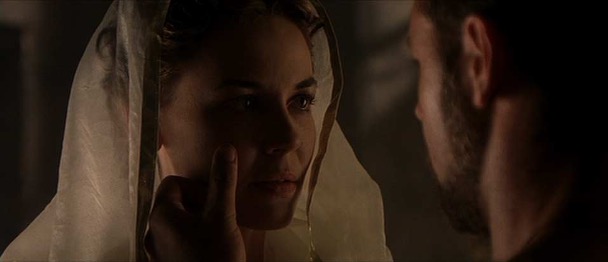
Afterward, Lucilla desperately seeks out Maximus to secure the future of the Senate and the People of Rome. She discovers that he survived and now fights as a slave in the gladiatorial games. The Gladiator initially turns her away, holding Lucilla accountable for his family’s fate and backing her brother’s rise to power. Although Lucilla is held captive by Commodus’ lustful fixation, her pleas don’t come from a selfish need. Instead, her duty and love as a mother drive Lucilla to find him in a last effort to save Lucius’ life. At first, Maximus hesitates to answer her call for help and feels he has nothing else to lose. His only pursuit is a swift death in the Colosseum to be reunited with his wife and son in the fields of Elysium. Nevertheless, Lucilla encourages him with a profound appeal to assume responsibility, prompting him to uphold the stoic ideals of their father by restoring the Roman Republic. This reminds the Gladiator of his oath to Marcus Aurelius, envisioning an opportunity to avenge his family and rescue her son.
Then, Maximus comforts Lucilla as she not only entrusts the safety of Rome and Lucius to him but also confesses her emotions wholeheartedly. They find solace in each other’s company, reminiscing with affectionate glances about their hidden feelings. Further on, warriors and senators alike plot with them to overthrow the Emperor by freeing the Gladiator from the pits of the Colosseum. Once he’s smuggled out of the city, Maximus will command the loyalty of his Roman Legionaries to march on Rome and restore the Republic. Yet Commodus foils their plan and confines Maximus back into the arena for a final match against himself in a rigged spectacle for the crowd. Eventually, Lucilla is held captive by his side, forced to watch her beloved struggle till death claims him in the Colosseum, where the mob gathers to witness a Slave defy an Emperor in the contest of the century that will decide Rome’s fortune.
In the opening of Gladiator (2000), Maximus Decimus Meridius, Commander of the Armies of the North and General of the Felix Legions, fearlessly leads his Roman Legionaries against the Germanic Tribes. Upon the eve of battle, he inspects their defenses, passing by rows of soldiers who address him with the utmost respect. Their faces have gone pale while they anxiously await for the barbarians lurking in the forest. However, the men’s spirits are stirred when they behold their General riding alongside them. Maximus’ presence on the battlefield eases their tensions before rushing into the fray. Straightaway, he charges at the enemy’s rear and catches them off guard in an ambush, but his horse knocks him down. After trudging through the mud in a scramble to survive, the General emerges victorious alongside his Roman Legionaries, who praise him as one of their own. Although Maximus is overcome with a euphoric triumph, his bliss is brief when he reflects on the struggle’s bloody aftermath. Now, the General longs for the warmth of his wife and son, praying for a safe return home. Above all, he wishes to lead a humble life, fulfilling his duties as a husband and a father while dreading to serve again in an endless war that will claim his life.
Gladiator, directed by Ridley Scott
From afar looms Lucius Aelius Aurelius Commodus, the son of Emperor Marcus Aurelius, who covets his father’s power and envies Maximus’ admiration. He arrives on a carriage to the encampment, presuming he’ll be received by clamoring soldiers. But his only exploit has been to cower behind the marble monuments of Rome. When he passes by with his Praetorian Guard, the Roman Legionaries opt to revere their General, who fought alongside them. Immediately, he kisses the Emperor, seeking instead attention from his disillusioned father. However, Marcus Aurelius turns him away in favor of Maximus, finding honor and courage in the son he never had. Consequently, Commodus’ prideful aspirations to become Emperor are threatened when Marcus Aurelius neglects his pleas for paternal validation. Therefore, he entrusts Rome’s fate to a General worthy of fatherly love, as Maximus challenges Commodus’ claim to win over his father’s affection.
Gladiator, directed by Ridley Scott
Atop a hill stands Emperor Marcus Aurelius, who melancholically meditates on whether his military campaigns to defend Rome have any moral justification. Once hostilities end, the Emperor forgoes his imperial prestige to approach his General as a caring and proud father. Initially, Marcus Aurelius respectfully greets him by asking: “How can I reward Rome’s greatest general?” (Gladiator 2000) Then, Maximus honestly responds: “Let me go home.” (Gladiator2000) This early exchange promptly presents the fondness both have for one another, displaying how they speak candidly as a father to a son, without any pretense of an Emperor addressing his General.
However, they’re interrupted by Commodus’ arrival, who arrogantly boasts: “Have I missed the battle?” (Gladiator 2000) Instantly, Marcus Aurelius cripples his egotistical bravado by ironically replying: “You have missed the war.” (Gladiator 2000) To add further injury and teach his spoiled boy a lesson, the Emperor instead exalts his noble warrior: “Honor Maximus. He won the battle.” (Gladiator 2000) Commodus is humbled by his father, compelling him to recognize who won the war. Then, Marcus Aurelius detaches himself from his son, considering him an unworthy successor, and turns to Maximus as his worthy progeny, who acknowledges their sacrifices when he poignantly remarks: “So much for the Glory of Rome.” (Gladiator 2000) Thenceforth, Commodus’ loathing festers against him, realizing he possesses none of the stoic attributes of an earnest son that his father requires for an heir.
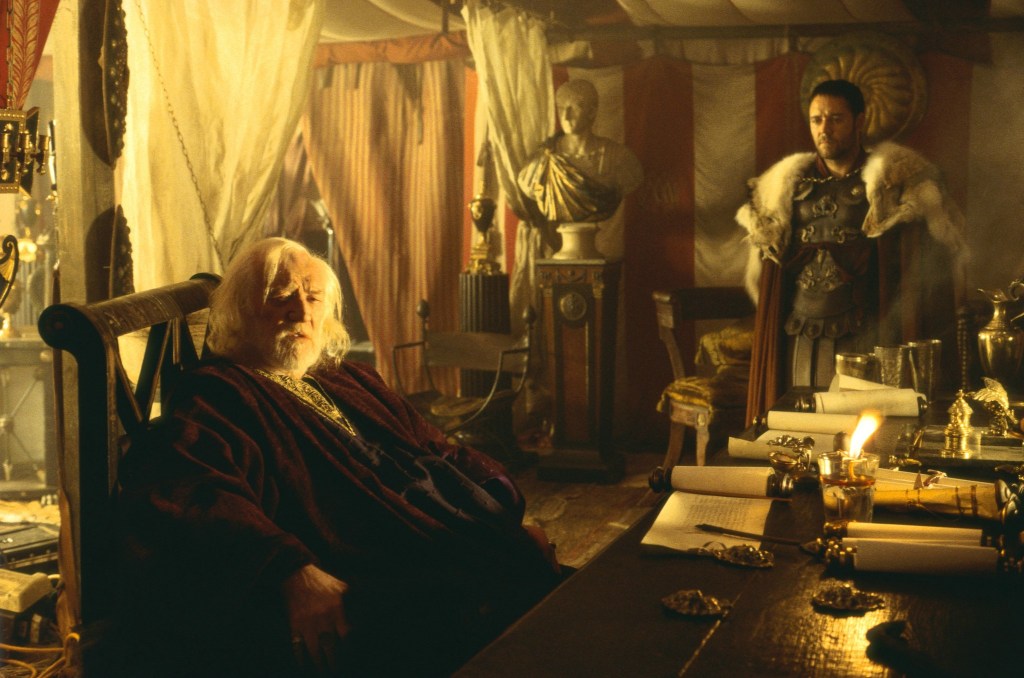
During the festivities, Marcus Aurelius exits his tent and requests Maximus’ company. Inside, the Emperor beholds a map of the Roman Empire, lamenting the violence he’s inflicted to defend the Senate and the People of Rome. He confides with him about the corruption of Rome’s socio-political structure and the necessity of reinstating the Roman Republic. However, the General refuses to believe that his men perished in vain, furiously expressing how they fought valiantly to protect Rome’s sanctity. Here, Marcus Aurelius tests Maximus by asking him what his heart desires most. Then, he wholeheartedly professes that he misses his family and wishes to return home. At that moment, the Emperor understands that his General doesn’t crave to wield great power but simply wants to retire in peace, living the rest of his days as a faithful husband and dutiful father. This answer reassures Marcus Aurelius of his choice, who assigns Maximus to restore the Senate and give a voice to the People by proclaiming him the Protector of Rome upon his death. Although he is honored by the Emperor’s vote of confidence, he wavers to assume this newfound responsibility that would grant him the authority to end the tyrannical rule of the Roman Empire and rebuild the democratic roots of the Republic. Regardless of the General’s doubts, Marcus Aurelius trusts him to fulfill his duty to Rome and assume his role as Emperor. At the end of their conversation, Marcus Aurelius voices his true feelings of paternal affection to Maximus when he expresses: “Now embrace me as my son.” (Gladiator 2000)
Gladiator, directed by Ridley Scott
Thereafter, Commodus proudly barges into his father’s tent, searching for Marcus Aurelius’ approval to succeed him as Emperor. Instantly, Marcus Aurelius snatches away his son’s ambitions and affirms that he doesn’t possess the stoic attributes that would make him a just ruler. He mourns his flaws as an absent father who failed to raise him properly for this duty. Upon revealing that Maximus will become Emperor, he tries to console Commodus but is turned away by his son, who grieves: “You wrote to me once, listing the four chief virtues: wisdom, justice, fortitude, and temperance. As I read the list, I knew I had none of them.” (Gladiator 2000) Next, he proclaims his qualities, naming ambition and devotion to the family, especially for his father. Lastly, Commodus conveys his feelings of neglect from Marcus Aurelius when he confronts him: “But none of my virtues were on your list. Even then, it was as if you didn’t want me for your son.” (Gladiator 2000)
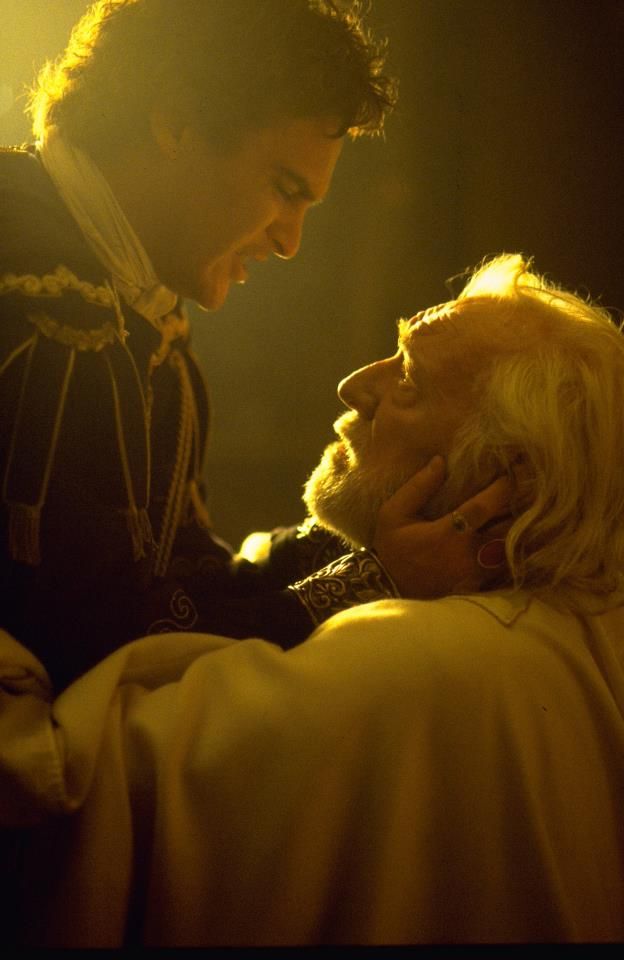
The Emperor recognizes that Commodus would be swayed by his impulsive behavior to seize power from the Senate and the People of Rome. After seeing his son suffer because he didn’t live up to his father’s expectations, Marcus Aurelius comforts him by confessing: “Commodus, your fault as a son is my failure as a father.” (Gladiator 2000) Consequently, Commodus’ sorrow heightens into anger against the Emperor, accepting that he isn’t his father’s favorite. In a melancholic moment, Commodus hugs Marcus Aurelius and tightens his grip until he can’t catch a gasp of air, angrily declaring: “I would butcher the whole world if you would only love me.” (Gladiator 2000) Ultimately, he commits patricide to become Emperor and readily summons his General to swear an oath of allegiance, but Maximus refuses only to face imminent execution, leaving Commodus with an undisputed claim to rule over Rome.
Moreover, Meditations harkens back to the philosophy of the Socratics with Epictetus’ teachings on the principles of moral virtue. Here, the Emperor contemplated how to discover his spiritual voice and speak with his “dæmon” to live in agreement with the universal nature. This brought Marcus Aurelius in contact with divine counsel, as the “logos” advised him to pursue what was meaningful and avoid distractions. Among these troubles, he warned himself against chasing after worldly desires and bursting out in fits of anger. Marcus Aurelius voiced this struggle to care for one’s soul by controlling his impulses when he conveyed: “Repentance is a kind of self-reproof for having neglected something useful; but that which is good must be something useful, and the perfect good man should look after it. But no such man would ever repent of having refused any sensual pleasure. Pleasure then is neither good nor useful.” (Meditations 75)
Then, the Emperor reasoned that he must balance his spirit and the universal law governing outer events, including the unpredictable nature of confronting pain. Since he had no influence over his surroundings, Marcus Aurelius pondered how he could endure an unfavorable outcome and accept the experience with a calm posture. To resolve this dilemma, he argued that the harmful deeds of others didn’t impact his nature; instead, the Emperor’s response to this injury defined his character. Marcus Aurelius displayed his resolve to stomach hardship when he articulated: “For he who yields to pain and he who yields to anger, both are wounded and both submit.” (Meditations 118) Often, the Emperor grasped that his mind’s outlook on a problem was potent enough to alleviate or increase his wound’s anguish. Only by learning to control how he perceived a harmful occurrence could he gain inner peace with his “dæmon” and “logos” instead of falling into distress. Accordingly, Marcus Aurelius sought a balance with the universal nature, understanding he held no power over his environment but only how he responded by reflecting: “Wipe out thy imagination by often saying to thyself: now it is in my power to let no badness be in this soul, nor desire, nor any perturbation at all; but looking at all things I see what is their nature, and I use each according to its value. Remember this power which thou hast from nature.” (Meditations 79)
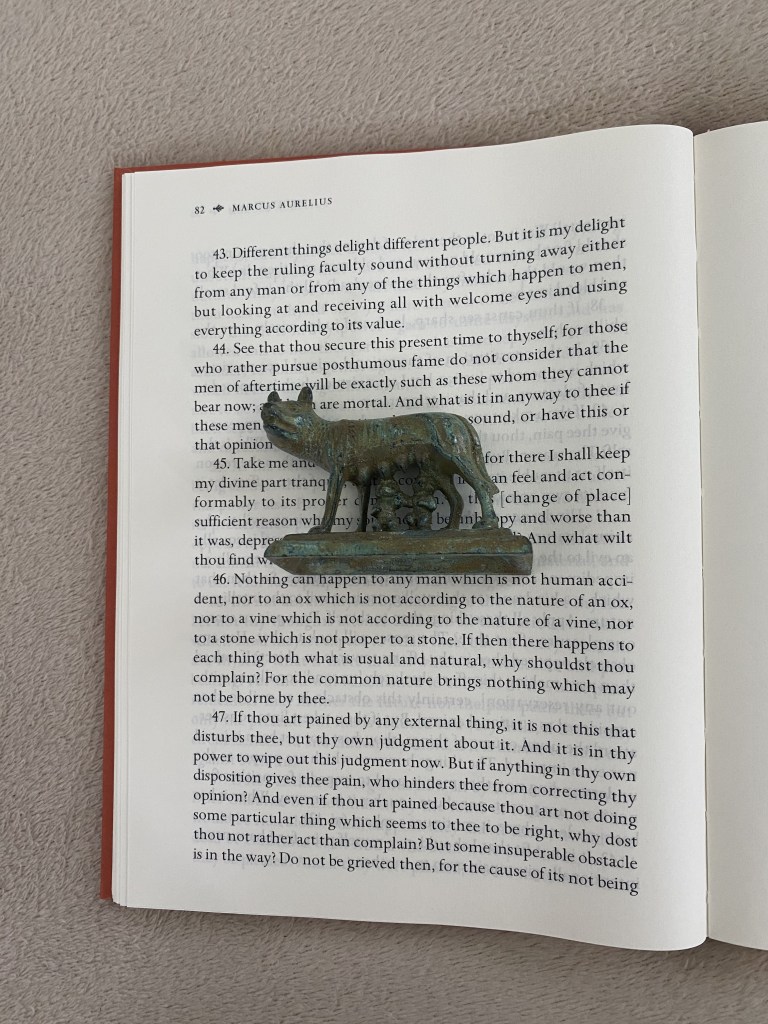
Afterward, the Emperor discussed that a pivotal lesson of Stoicism is that happiness becomes the responsibility of every individual, with the quality of his thoughts shaping a man’s attitude. Consequently, his surroundings can deal a good or bad hand regardless of one’s character. However, Marcus Aurelius didn’t hold himself answerable for the world’s nature but was only accountable for his reaction when facing tragedy by contemplating: “If thou art pained by any external thing, it is not this that disturbs thee, but thy own judgment about it. And it is in thy power to wipe out this judgment now.” (Meditations 82) Therefore, the Emperor understood that he could revoke the notion of whatever disturbed his harmony, exercising power over his mind’s opinion about that which troubled him.
Overall, Meditations records Marcus Aurelius’ personal reflections on how to lead a virtuous life in accordance with the teachings of Stoic Philosophy. Throughout his reign, he relished a life of luxuries fit for a Roman Emperor. He was free to abuse his authority with prideful ambitions that would’ve seen him indulge in every vice, from fleeting pleasure to spewing anger. Nevertheless, he chose to rule Rome’s powerful economic and military force under the beliefs of Stoicism. In his daily life, Marcus Aurelius practiced humility, patience, and gratitude when addressing the challenging predicaments of upholding his character or the numerous crises faced by the Roman Empire. Above all, the Emperor consulted his “dæmon” or “logos” for spiritual guidance and divine wisdom to contemplate the principles of universal change while leading a life of moral virtue. Hence, Meditations serves as the archetypal work of Stoic Philosophy that preserves Marcus Aurelius’ implicit teachings on how to practice wisdom, justice, fortitude, and moderation to master the self, as the Roman Emperor’s pursuit to live righteously in accordance with nature while building a relationship with his innermost soul immortalized him for generations of readers as the Philosopher-King from the Greco-Roman World.
In Meditations, the Emperor reflected on how to lead a virtuous life in accordance with four chief virtues that allow a man to live in harmony with nature. These are categorized into wisdom, justice, fortitude, and moderation. Throughout the text, Marcus Aurelius explored how to deduce a man’s character based on his moral or immoral behavior by declaring: “If it is not right, do not do it: if it is not true, do not say it.” (Meditations 126) Alongside, he pondered how everyone is destined to receive his rightful due and should be prepared to face the consequences of his actions. Next, the Emperor contemplated the importance of persevering amidst the constant toiling and suffering that must be tolerated in life. Finally, Marcus Aurelius remarked on how to live in utter simplicity by employing self-discipline toward the proclivity for earthly desires.
A critical teaching reverberating in Meditations is the mastery of the self, with the Emperor expressing a need to conquer his emotions. Here, he observed that one must learn to overcome his fits of passion or risk falling into an adrenaline rush of poor decision-making. From this philosophical thought, Marcus Aurelius affirmed: “Be thou erect, or be made erect.” (Meditations 63) Only by gaining control over his impulses, could he learn to live judiciously and purposely. Although Marcus Aurelius would experience pleasure, anger, grief, despair, temptation, and pain, these would not influence his reaction to outer events. By subduing his emotions, the Emperor maintained the ruling faculties that defined his character, leading to a more fulfilling human experience by finding happiness through a stable life of inner peace. Another personal reflection of Marcus Aurelius clarified this when he said: “Whatever anyone does or says, I must be good, just as if the gold, or the emerald, or the purple were saying this: Whatever anyone does or says, I must be emerald and keep my colour.” (Meditations 63)
Furthermore, the Emperor echoed the philosophy of the Pre-Socratics with Heraclitus’ teachings on the world’s nature and the principle of universal change. Firstly, he wondered why men should fear transformation when this is a natural stage of maturity between an individual and his environment. Both require alteration to uncover their true visage, meaning that for a garden to bloom in the spring, one must risk its withering in the fall. When speaking of change, Marcus Aurelius ruminated: “Is any man afraid of change? Why, what can take place without change? What then is more pleasing and more suitable to the universal nature?” (Meditations 64)
Alongside, the Emperor deduced the finite scope of human life and how insignificant it is to desire marble monuments in one’s name when none will be there to remember. He reasoned that everyone is destined to perish due to the nature of men, governed by the universal law of transformation. However, some seek to be immortalized with a vainglorious recollection of themselves, appealing to the adoring masses for their deeds to live on through them. Nevertheless, he concluded that this proud act to achieve immortality beyond death is not worth pursuing due to the far-reaching and ever-stretching sands of time that sooner or later wipe out the prideful from all memory. When examining the fate of mortals and their eventual fading from history, Marcus Aurelius expressed: “For all things soon pass away and become a mere tale, and complete oblivion soon buries them. And I say this for those who have shone in a wondrous way. For the rest, as soon as they have breathed out their breath, they are gone, and no man speaks of them. And to conclude the matter, what is even an eternal remembrance? A mere nothing.” (Meditations 31)

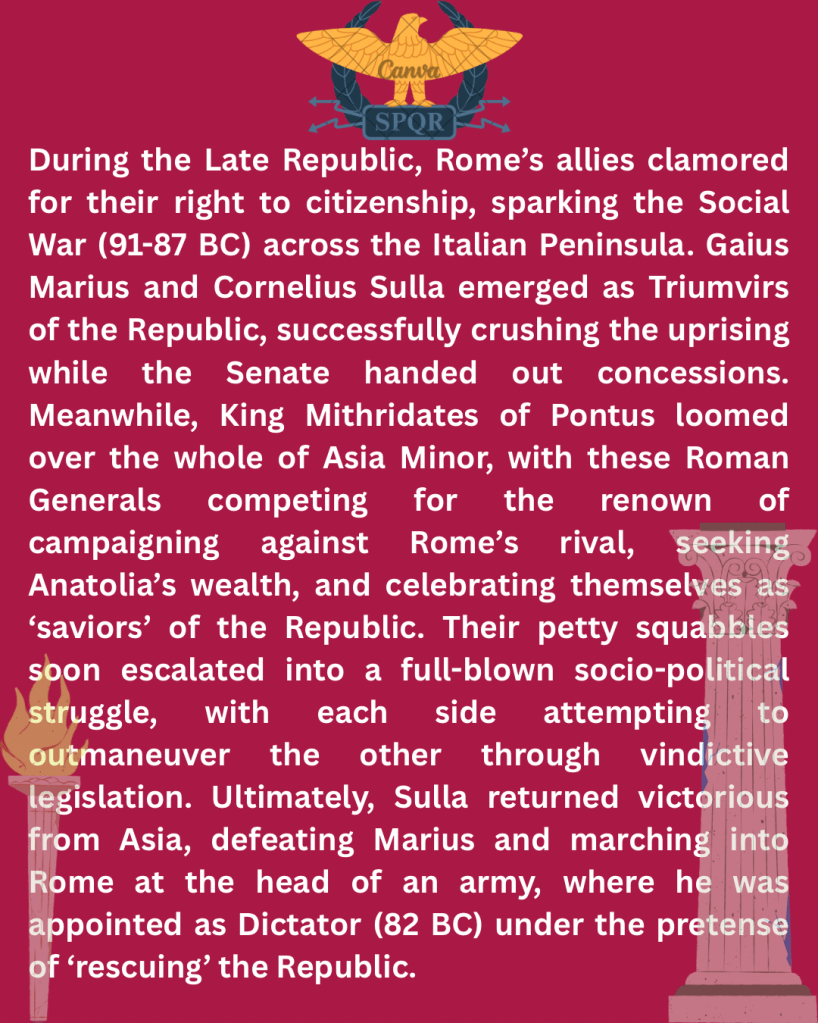
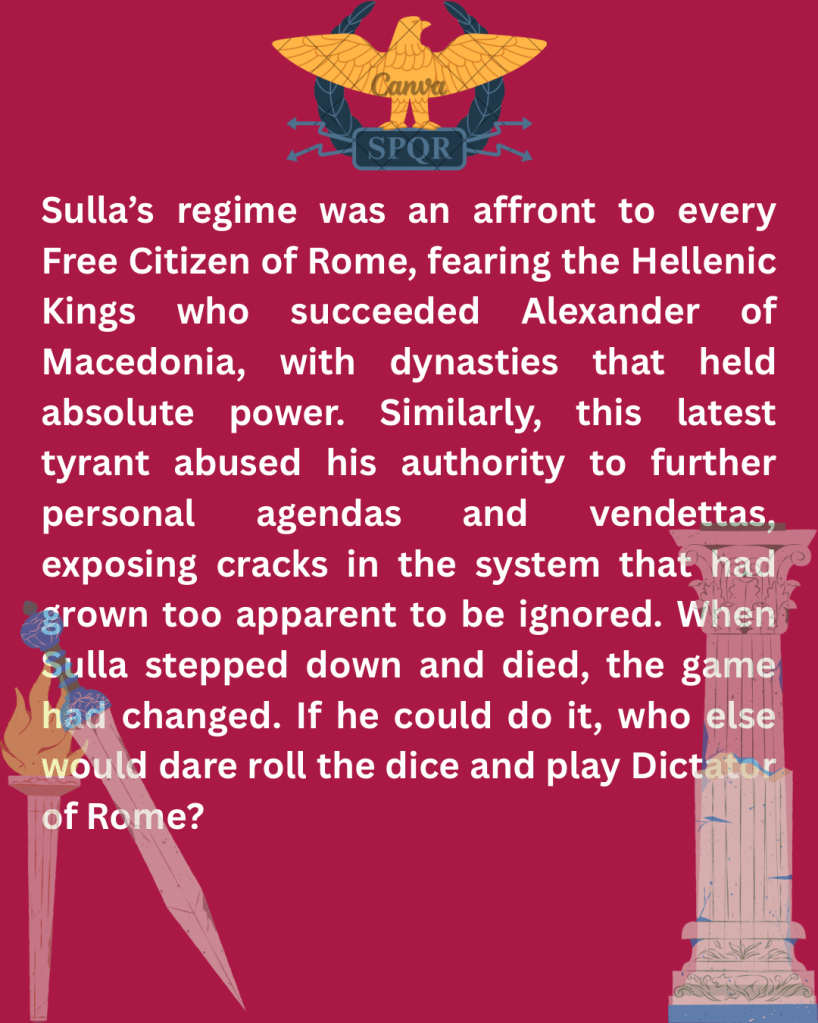
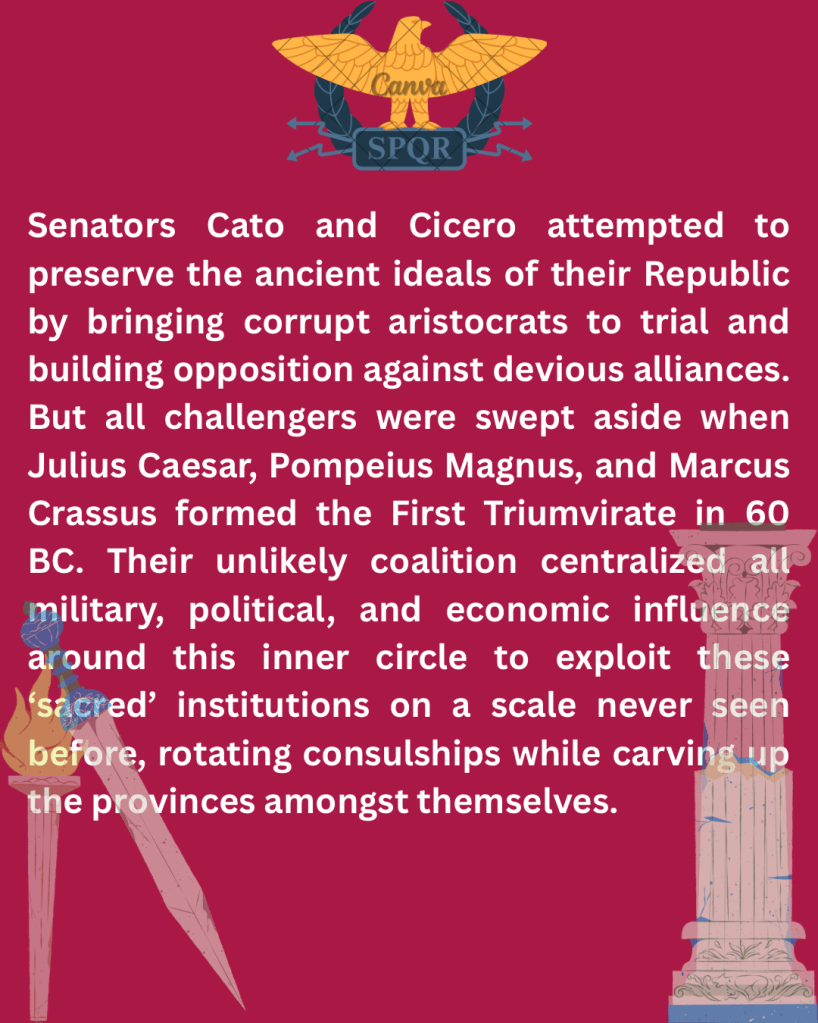
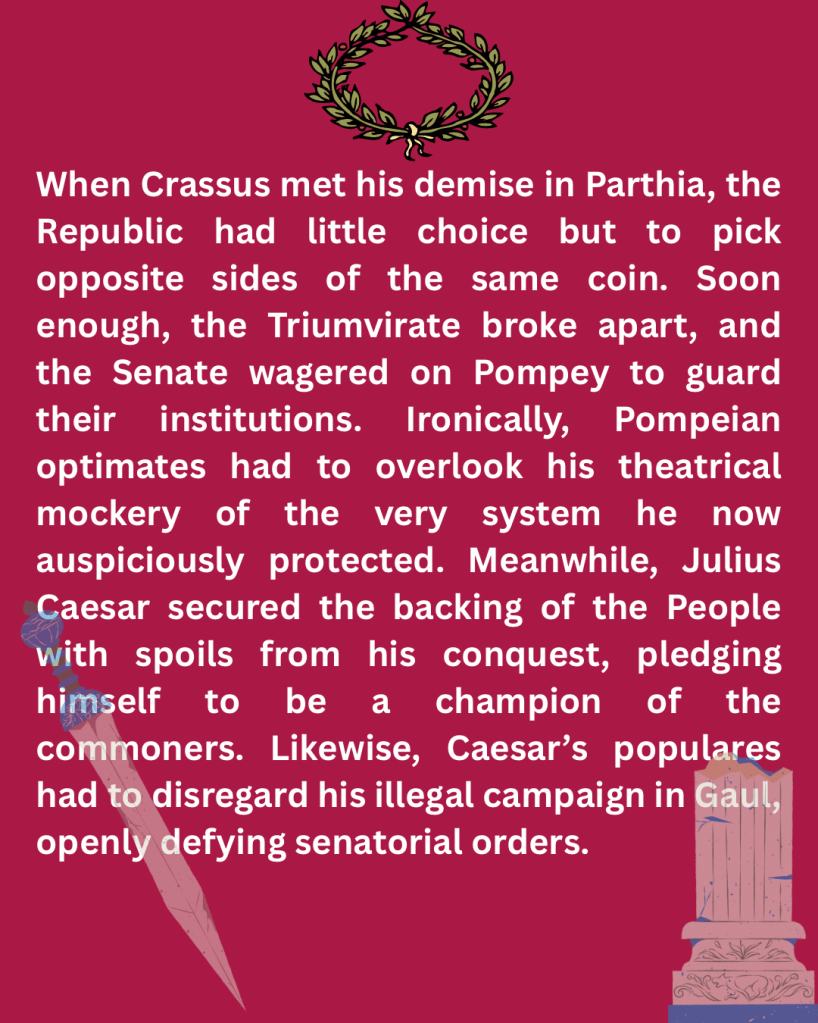





 The Western Voyager