Posted in Film and Literature Analyses, The Death of the Fantastical in Pirates of the Caribbean

The Death of the Fantastical in Pirates of the Caribbean Part II

By: Bryan Ricardo Marini Quintana

Pirates of the Caribbean: The Curse of the Black Pearl, directed by Gore Verbinski

The Interweaving Fantastical And Civilized Realms

Amid the rivaling worlds of order and chaos are William Turner and Elizabeth Swann, who act as intermediaries between the fantastical and civilized realms through their blossoming love. When these characters first encounter each other, William Turner is perilously drifting in a wreckage, gasping for life as a despicable young pirate. Meanwhile, Elizabeth Swann is safe aboard a ship living her life as an esteemed young lady. This meeting flickers curiosity amongst them about what the other lacks, either to be civilized by an aristocratic woman or find excitement with a dangerous man. Further on, they’ve both grown infatuated with each other, leading a life of comfort confined to an island under the protection of Great Britain’s Royal Navy. During this time, William struggles to leave behind his life as a pirate to integrate into society, whilst Elizabeth desires to escape her life as a lady held hostage in an arranged marriage. However, William is entranced by Elizabeth’s life as a lady and the prospect this brings for him to settle in by courting her. Counterintuitively, Elizabeth is smitten by William’s life as a pirate and the opportunity this brings for her to be swept off in an adventure. Nevertheless, both are thrust into a perilous voyage when William’s pirate life surfaces to haunt him, with Elizabeth being entangled by boarding the fantastical realm to escape the civilized realm.

Along their adventures, Elizabeth and William are captured by either Captain Barbossa or Davy Jones, facing ruthless pirates who plunder the seas to instill terror. To rescue each other, the couple enlists help from Captain Jack Sparrow, an outlandish mariner who serves as a mentor in their journey across the world of chaos. Elizabeth and William free each other from the clutches of piracy and experience a thrilling sense of freedom with guidance from the notorious pirate. A mere taste of sailing across the seven seas enamors the couple with being masters of their destiny aboard the Black Pearl, away from the world of order. Though attracted to this life, both return to the civilized realm by arranging a marriage after guaranteeing Captain Jack Sparrow’s freedom in the fantastical realm.
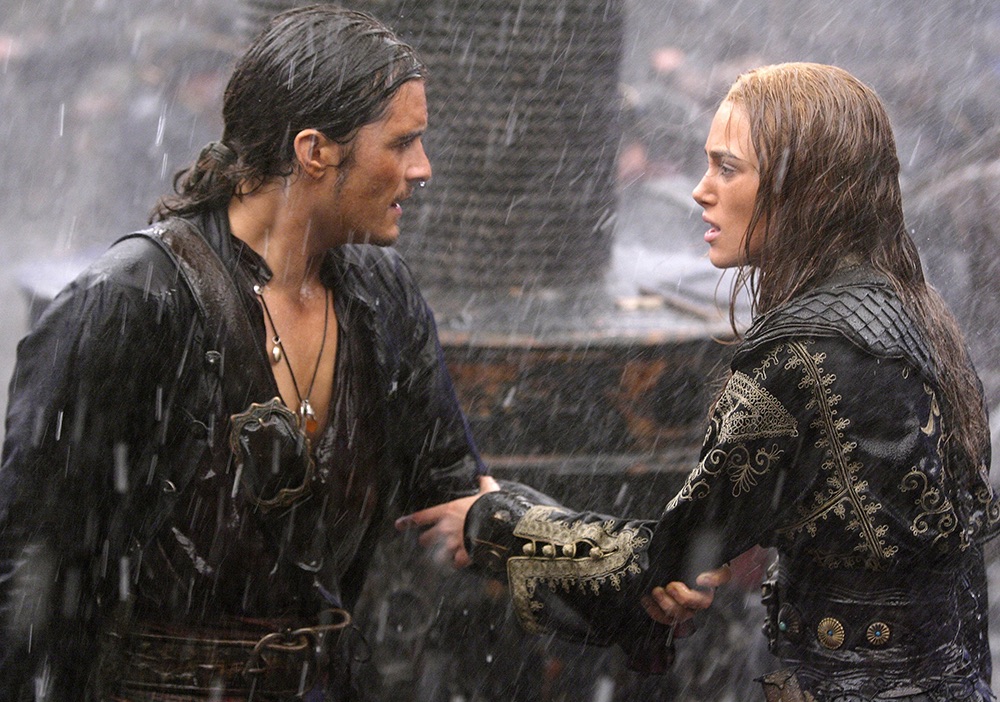
Pirates of the Caribbean: At World’s End, directed by Gore Verbinski

Despite this, William’s and Elizabeth’s lives are threatened when Lord Cutler Beckett hunts them down for their past dealings with the infamous pirate. To safeguard their future, the couple navigates the seven seas in search of Captain Jack Sparrow to aid them reclaim their freedoms. Once reunited, William and Elizabeth join the struggle to prevent the extinction of the old fantastical realm due to the East India Trading Company’s tyrannical imposition of the new civilized realm. Ultimately, this leads the couple to become pirates aboard the Black Pearl who fight for their freedoms alongside Captain Jack Sparrow’s magical world, opposing Lord Cutler Beckett’s material world that oppresses the seven seas with the East India Trading Company.

Posted in Film and Literature Analyses, The Death of the Fantastical in Pirates of the Caribbean

The Death of the Fantastical in Pirates of the Caribbean Part I

By: Bryan Ricardo Marini Quintana

Pirates of the Caribbean: The Curse of the Black Pearl, directed by Gore Verbinski

The Conflicting Magical And Material Worlds

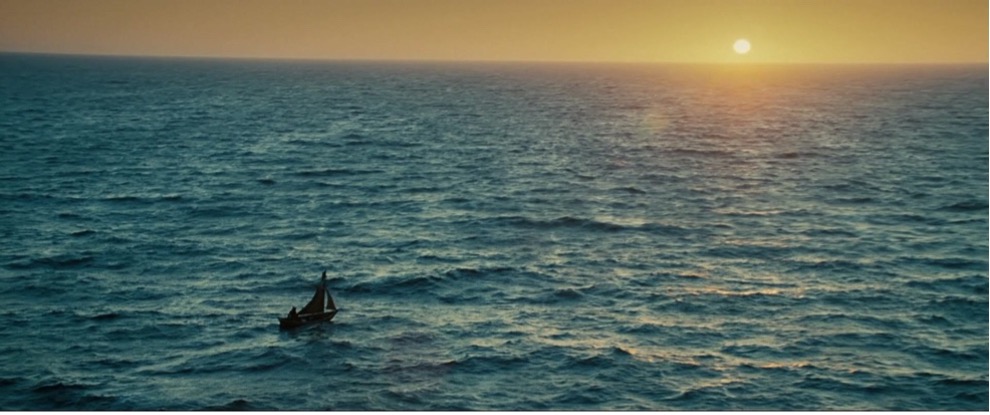
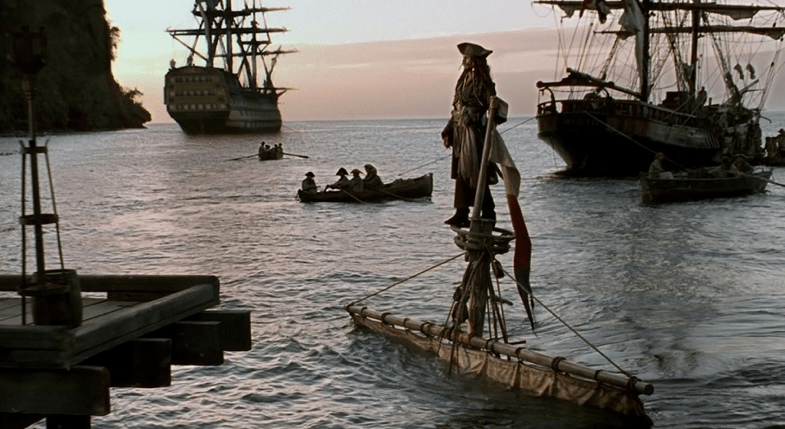
In Pirates of the Caribbean: The Curse of the Black Pearl, Jack Sparrow is introduced as a captain without a ship who sails aimlessly in a sinking boat. Using his cherished compass, the infamous pirate is guided towards what he desires most, to navigate freely beyond the horizon without a destination. Throughout his story, Jack Sparrow embarks on perilous voyages in a constant chase to recover his beloved ship. For the notorious pirate, commanding the Black Pearl means being the master of his destiny. Aboard his ship, Jack Sparrow can search for adventures in the unknown world beyond the horizon, crossing the seven seas to explore the blank edges of the map. Whilst drunk on an island in Pirates of the Caribbean: The Curse of the Black Pearl (2003), Jack Sparrow expresses the significance of his ship: “Wherever we want to go, we go. That’s what a ship is, you know. It’s not just a keel and hull and a deck and sails. That’s what a ship needs. But what a ship is… what the Black Pearl really is… is freedom.” With these words, the character exposes his irony as a pirate who doesn’t seek fortune by plundering ships but reveals a mariner whose most treasured possession is his freedom to sail whenever and wherever he pleases.

Using his compass, Jack Sparrow traverses through the magical world of chaos inhabited by pirates such as Hector Barbossa aboard the Black Pearl and Davy Jones aboard the Flying Dutchman, who terrorize any hapless ship they encounter. Nevertheless, these pirates navigate at the mercy of the goddess Calypso and the monstrous Kraken, who reign over the fantastical realm of the seven seas. Despite Jack Sparrow’s terror of confronting rival pirates and mythical beings, his greatest fear doesn’t emerge from the magical world of chaos but from the material world of order. Through the East India Trading Company, Jack Sparrow’s freedom to be the master of his destiny is threatened, with Lord Cutler Beckett filling the blank edges of the map and ending the Age of Exploration by claiming dominance over the seven seas for the civilized realm of Great Britain’s imperial interests.
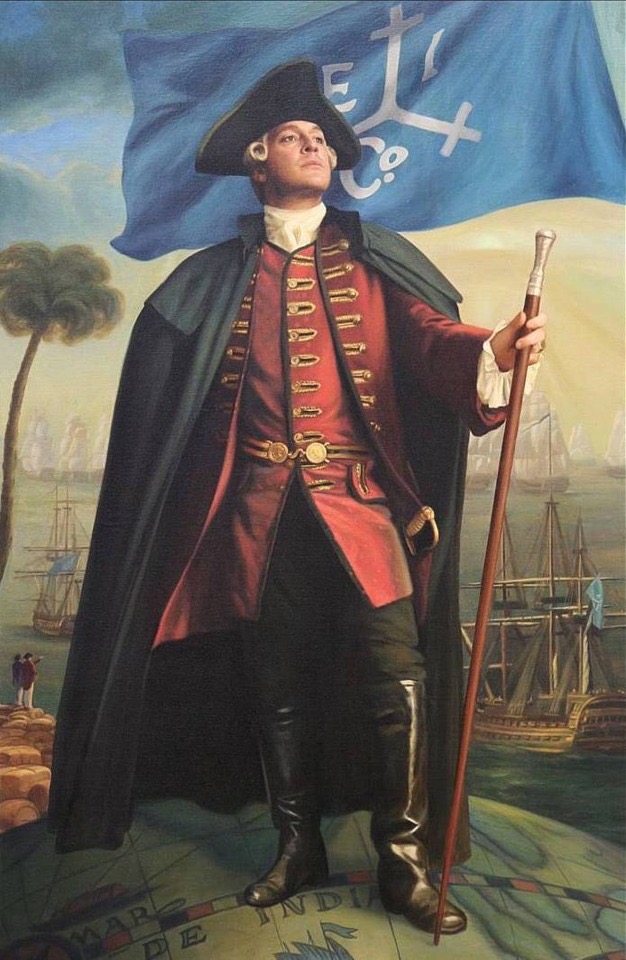
Pirates of the Caribbean: At World’s End, directed by Gore Verbinski

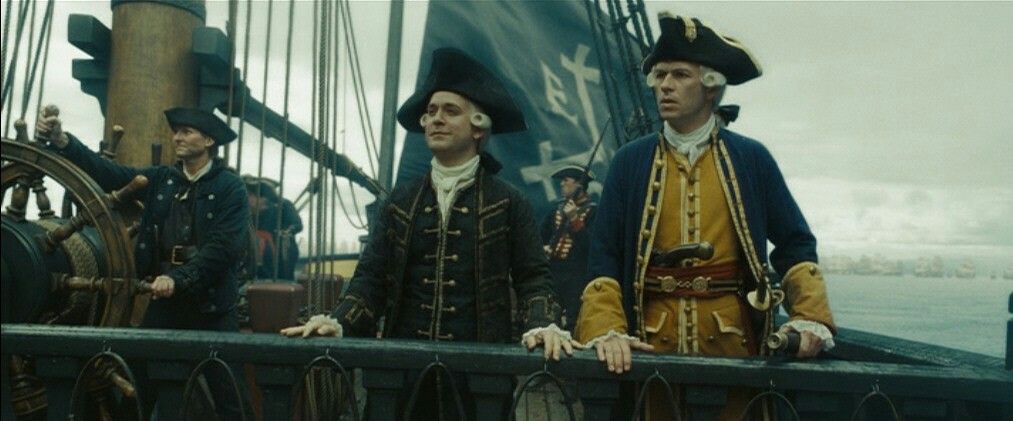
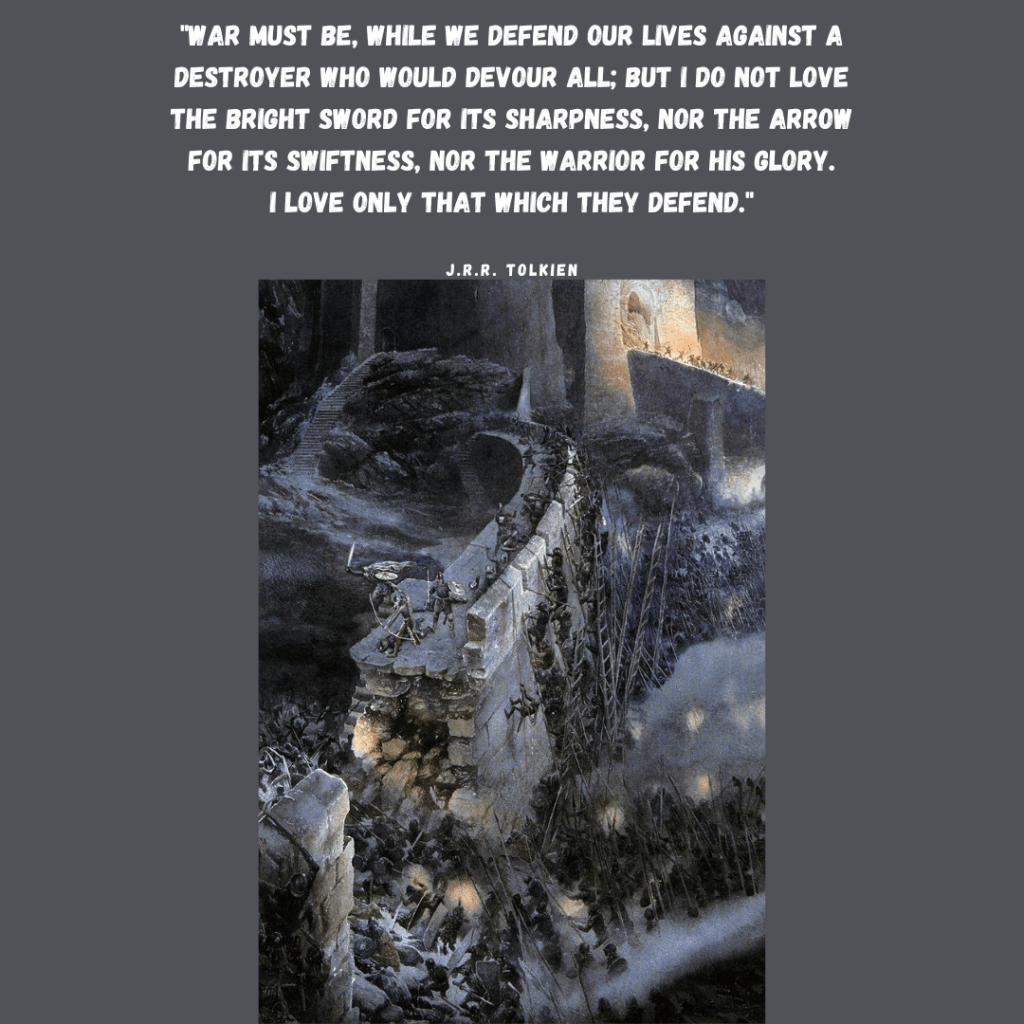
Opposing Jack Sparrow’s fantastical realm of chaos with the Black Pearl is Lord Cutler Beckett’s civilized realm of order with the East India Trading Company. Sailing aboard the Endeavour, this feared commander secludes himself in his cabin with a prized map of the world, designing a strategy to submit the magical world to his vision of a material world. Consequently, Jack Sparrow’s freedom in the new civilized realm becomes a threat to Lord Cutler Beckett because of his inability to exert dominance over him in the old fantastical realm. In Pirates of the Caribbean: Dead Man’s Chest (2006), Lord Cutler Beckett reveals his perception of the infamous pirate: “Jack Sparrow is a dying breed. The world is shrinking, the blank edges of the map filled in. Jack must find his place in the new world or perish.” With these words, the character divulges his prideful ambitions to eradicate the Age of Piracy and surface the Age of Industrialization, allowing him to govern the seven seas. However, Lord Cutler Beckett believes himself to be a just leader who shields and spreads the material world of order by structuring the unknown. Instead, this feared commander is a tyrannical ruler who crushes and restrains the magical world of chaos by oppressing the freedom of pirates to be masters of their destiny. Therefore, the East India Trading Company enslaves Davy Jones and executes the Kraken to mop up any threat from the fantastical realm that can contest their power over the seven seas in their self-imposed civilized realm.

Posted in Short Stories

A Civilized Beast

By: Bryan Ricardo Marini Quintana

(Joseph Binder, Romulus and Remus, 1850)


“At the edge of the civilized farm, a bloodthirsty beast prowled the wild woods, the untamed wolf.”

Long ago, the Shepherd’s proverb taught Wolfe of the dangers posed by the barbaric nature of his kind. After swearing loyalty to his new master, he was bestowed with the gift of consciousness. From thereon, Wolfe showed no remorse for the pack of wolves that hunted nearby. To keep his conscious state, Wolfe had to fulfill his duties and remain within the borders of the civilized farm. When he left the wilderness behind, Wolfe chose to have an identity by embracing a sheltered life within civilization, thankful that the Shepherd had granted him a name.

Before the wolf was tamed, the Shepherd wandered away from civilization in defiance of nature, facing the depths of human fear and desire. Although tempted to relish boundless freedom, he withstood nature’s melody, abiding by the laws of men as he traversed into the wilderness. Amidst this rabid forest, a pack of wolves reigned unopposed over this lawless land. Here, they were at the top of the food chain, with all other beasts lying below at the mercy of their behest. Driven by jealousy of the wolf’s grip over these woods, the Shepherd sought to defile their status in nature. The infuriating inability to submit them by force urged him to build a farm. There, he retreated into the confines of civilization, where the Shepherd hid in fear of the wolf’s wrath.

Afterward, his sheer ambition of expanding the borders of men’s laws compelled the Shepherd back into the wild to save beasts from themselves. A righteous purpose motivated him to yield nature to his will, fighting for the survival of his consciousness. Once the wolves were deposed from their power, he would proclaim himself as the dominant species of nature, and civilization would fear no rivals, with animals learning the decrees of men. On a blessed night, as the full moon rose, the pack of wolves thundered from the forest to confront a civilized man and devour their prey. However, nature betrayed them as a fog emerged to shade the pale light, leaving the wolves weakened and exposed. At the tipping point of the confrontation, the Shepherd shot the pack’s leader and turned the tide. In a frenzy of terror, the wolves scattered, retreating into the darkness of their caves. Amidst the chaos, a cub was left behind, with the Shepherd claiming the beast as his prize to civilize nature. He took him back to the farm, where the wolf was given a name, taught manners, trained how to communicate, and drilled to fulfill tasks. Any sign of nature’s lawlessness within him was stripped away, and he became Wolfe, an animal destined to fulfill the Shepherd’s command to spread civilization.

Inside the farm, various animals assumed different responsibilities to maintain the institution of their society, serving at the bidding of their new master. The herd’s servitude was rewarded with the commodity of life in their home. Here, conscious animals accomplished their errands and, in exchange, relished their identity and safety. Among them, Wolfe found meaning in his duty by guiding the flock of sheep and protecting them beyond the civilized farm. Outside, the pack of wolves lay lurking in the woods while Wolfe beheld them from afar as wild beasts who were incapable of questioning or reasoning about their very existence.

Whilst leading a flock of sheep into the wilderness, Wolfe confronted the dangers posed by the forest. A constant temptation to turn berserk haunted him as he traversed through nature. Then, Wolfe stood at the top of a hill, staring down at the pack of wolves that prowled nearby. In these tense moments, he was tested as he gazed fearfully at his kind, remembering his natural state. However, Wolfe would always recall how he was rescued by the Shepherd and gifted a consciousness that allowed him to relish his identity. These memories made Wolfe come to terms with who he was, constantly reminding himself of the purpose given by his old master. If he wanted to keep his name, Wolfe must continue obeying him by guiding and defending the vulnerable flock of sheep. This way, Wolfe accomplished his chores and served his purpose to the civilized farm, fending off those wild beasts. Although Wolfe’s choice reassured him of his place amongst civilization, he had consequently disassociated himself from the pack of wolves. 

On the way back, as Wolfe entered the confines of the civilized farm again, he glanced back at these rabid beasts, wondering if he truly belonged here or there. The tamed wolf became tortured by his consciousness and discovered his morality, realizing that these conflicted with each other as he questioned his duty to civilization. Wolfe was puzzled by his identity, asking himself if he was ever meant to survive amidst the natural habitat of the oblivious wilderness or if he was destined to evolve and become civilized. Further on, Wolfe pondered whether he was ordained to enlighten his kind or fated to keep them at bay, remaining dormant in their barbaric state. Decisively, Wolfe turned away from their tempting glances, returning to the civilized farm but feeling conflicted about the decision to preserve those borders between conscious animals and wild beasts. From the safety of civilization, Wolfe heard the spellbinding howl from the pack of wolves, calling him back into those dark woods. This sparked curiosity within the tamed wolf, who wondered how these beasts could feel companionship with him if they lacked a conscious state. Every day, Wolfe traveled back and forth, leading the flock of sheep to the wilderness and out of those depths into civilization as he grew doubtful of his very name.

Suddenly, temptation struck on a cursed night when the full moon rose, and the pack of wolves thundered from the forest. Wolfe immediately became entranced by the rabid beasts’ preying eyes, grizzled hair, sharp claws, and salivating mouths. They lashed themselves toward the flock of sheep, fighting ferociously against Wolfe, who valiantly protected them to safeguard his kind. Swiftly, Wolfe clawed and drooled over the ground while the pack of wolves drew ever closer, with the dormant wilderness awakening to be set free. When they attacked, Wolfe passed out. Upon awakening, he gained consciousness, only to realize that around him lay a slaughtered mountain of beasts. He gazed at their gnawed carcasses that had been viciously devoured as Wolfe remained frozen by his reaction. In that instant, he was terrified of the carnage he had caused, questioning his identity. Immediately, he looked at the sheep to be comforted by them of his civilized manners, but they turned away in horror. The flock fled to the civilized farm to tell their Shepherd what travesty had occurred. Subsequently, Wolfe shifted between his conscious and wild state to decide what to do with them, fearful of his master’s harsh sentence. He reasoned that the flock of sheep observed him with their proud eyes and refused to speak with a beast. When Wolfe realized that these animals had unjustly judged him after saving them, he caved into his natural state. Here, the beast made an irrational action that the animal still lingering inside him attempted to justify as rational, eating the flock of sheep to prevent his master from uncovering the truth. In an act of desperation, Wolfe launched himself at his former kind and feasted lavishly on their flesh, succumbing to the dusk’s ghostly glow.

After the massacre, Wolfe lay petrified over his foul deeds, burdened by the consciousness of a civilized animal and yet consumed by the wilderness of an untamed beast. Then, Wolfe pondered whether he should confront the Shepherd and face his judgment. However, he feared his master’s whip, knowing he would be found guilty and ostracized from his home. Otherwise, Wolfe understood that if he were banished from his master’s farm, he would forget himself. Furthermore, he would lose his driving purpose for life and his bed at the sanctuary. Yet, Wolfe was unwilling to face the weight of his crimes, knowing he would pay a hefty price. Consequently, Wolfe contemplated that his only option was to hide in the woods, but he had no pack to hunt with anymore. If he chose to go back into the wild, Wolfe would forget who he was. The tamed wolf didn’t want these options, and he knew that either path doomed him to lose his life’s meaning. In a final act of reason, Wolfe consumed himself instead of submitting to his master’s punishment or nature’s lawlessness. Here, Wolfe opted to die young, preserving his conscious state rather than living the rest of his life alone and succumbing to old age. This fate terrified Wolfe, who grasped that he would roam the wilderness without reasoning his existence. Instead, Wolfe chose to perish savagely by his piercing fangs, preferring to leave this world while he still could cling to his consciousness for a little longer. Therefore, Wolfe greeted his mortal end with grace, believing it was honorable to die in his youth with a divine purpose to uphold, a stream of memories to evoke, and a unique name to own. 

“Alas, the wolf could not be tamed, as nature reclaimed him in his rabid state whilst he devoured himself with table manners, keeping a shred of civilized dignity at the very end.”

Posted in Film and Literature Analyses

Sailing to Byzantium

By: Bryan Ricardo Marini Quintana

(Rembrandt, The Storm on the Sea of Galilee, 1633)


In the poem, “Sailing to Byzantium”, poet William Butler Yeats narrates a spiritual journey of the body’s decay whilst the soul rejuvenates. At the start a voice says: “That is no country for old men…” (Yeats). Through these words, the poet makes it clear that those of old age are neglected by the boats that carry mortals to Byzantium. Instead, the gift of sailing to this majestic city is bestowed upon those with a youthful essence. Afterward, the voice presents how the younger mortals are like “…birds in the trees…” (Yeats), who sing and enjoy life with ecstasy. However, “…Those dying generations…” (Yeats) don’t share this festive sentiment with their dry voices that aren’t able to sing joyful melodies anymore. In a pessimistic manner, the poet says: “Whatever is begotten, born, and dies. / Caught in that sensual music all neglect / Monuments of unageing intellect.” (Yeats). These key lines unveil how old men have been relegated from society, due to their decrepit state and pessimistic nature. What these lines reveal, is the refusal of the voice to allow what energy is left within his soul to dwindle. Evidently, the poet shows his fears of dying and being forgotten, unveiling that although there is a youthful spirit within, the body is continually waning. Withering with old age, the voice longs to reach the city of Byzantium to be free of his mortal confines. By keeping his soul joyful with the melodies of life, the voice has been granted passage to the city of Byzantium. Therefore, the poet prepares for the journey, with an unwavering resolution to let go of his decaying body and travel to a city that will rejuvenate him. Hence, guided by the singing of birds that call unto him to make the journey, the voice leaves the mortal world and sails towards Byzantium, choosing to reach this eternal city, where beings through joyful melodies don’t age, rather than stay amidst wrinkled bodies clinging unto pale souls, meeting his fate.

Reaching the shores of the majestic city of Byzantium, the poet describes his journey’s end. Immediately, the poet depicts the city as Holy, a structure that had withstood the winds of change, still standing as a pivotal beacon of importance throughout the years. In here, the historical significance of the city plays a pivotal role in why the poet chooses to travel specifically towards this destination. Evidently, throughout history this city has acquired importance to the Greeks and Persians. Even beyond, The Macedonian Empire, The Roman Empire, and The Ottoman Empire recognized not only its benefiting strategic location but the cultural significance it carried. This reveals how across various civilizations and nations that have risen and fallen, the city has withstood throughout years, embodying a symbol of cultural pride. For these reasons, William Butler Yeats chooses to sail in a spiritual journey of rejuvenation to this unageing city. Therefore, this makes Byzantium the ideal city for the poet to visit as the strength of his body wanes but that of his soul is filled with energy. Allowing for the frail voice to be rejuvenated by reaching a city that throughout history has withstood as a haven of art and immortality.

Afterward, the poet reaches the city and says: “O sages standing in God’s holy fire / As in the gold mosaic of a wall, / Come from the holy fire, perne in a gyre, / And be the singing-masters of my soul.” (Yeats). With these words, the voice describes the city as an entity of its own. Alongside, this entity is either blessed by a divine being or is the manifestation of a divine being. Thereafter, the poet is at the gates of the city and is received by angelic voices that sing a melody that rekindles his soul. Although the decaying state of his body would have left the doors shut, due to the joyful melody within his soul, the voice is granted entrance. Onwards, the poet describes the beauty of the song and how it has awakened his soul, with the essence of the voice being filled with a rejuvenating chorus that welcomes him into the city.

Once inside, the poet describes the end of his journey by saying that now in the city he can be free from mortal constraints. “Once out of nature I shall never take / My bodily form from any natural thing,” (Yeats). With these lines, the poet rejects the limitations of a human body and begins to let go of wrinkled flesh that clings unto a glistening soul. By getting rid of what limits him, an aged body that ties the voice to the mortal world, the process of rejuvenation may begin. Thereafter, the poet lets go of his mortal form to transcend mortality and reach immortality. This change from a mortal man to what can be comprehended as a transformation into art itself, is shown when the voice says: “But such a form as Grecian goldsmiths make / Of hammered gold and gold enamelling” (Yeats). Now, the poet has unveiled his greatest desire, wishing to become art. This will make the voice a part of what comprises the city of Byzantium, allowing him to live on forever. In order to become art, the poet describes the process of a Grecian goldsmith that will give him a new form that will immortalize the poet. With this new form, the voice will become a part of Byzantium that can be admired throughout history, by saying: “To lords and ladies of Byzantium / Of what is past, or passing, or to come.” (Yeats). In these final words, William Butler Yeats reveals his true intentions, with a desire to become art being fulfilled due to the soul that remained joyful and sought to sail towards the city, as Byzantium embraces him with melodies and grants the voice a wish to become immortal by transforming the poet into art that can be admired forever.

Works Cited:

Butler Yeats, William. “Sailing to Byzantium.” 1928. Poetry Foundation,
https://www.poetryfoundation.org/poems/43291/sailing-to-byzantium

Posted in Film and Literature Analyses

The Author to Her Book

By: Bryan Ricardo Marini Quintana

(Edmund H. Garrett, Nineteenth century depiction of Anne Bradstreet)


In “The Author to Her Book”, poet Anne Bradstreet writes of an intimate relationship between herself as a creator and the text as the creation. This brings the element of family into the poem, giving Anne Bradstreet and the text a relationship akin to that of a mother with her child. At the start, the text is granted life and a consciousness of its own through the writer, as Anne Bradstreet says: “Thou ill-form’d offspring of my feeble brain,”. What the poet expresses here is how the text derives its essence of being and consciousness from the mother. Afterward, Anne Bradstreet shows that as a writer, her creation is like raising a child. Throughout the poem, the descriptions bear similarity to a relationship between a mother and her child, as the writer gives birth to the text to then mold it. This way, Anne Bradstreet sees the text as a part of herself, saying: “Who after birth didst by my side remain,”. However, a time will come when the mother must let go of her child, as the text becomes detached from the writer. Outside of the writer’s protective bubble, the text will be judged. “Till snatched from thence by friends, less wise than true,” (Bradstreet). With the text taken away from the author, now it isn’t under her care anymore and must face the masses in an exposed state to be embraced or rejected. This makes the mother or writer come to terms with her limitations as a creator, realizing she must let go of the text no matter how difficult it may be, allowing her child to face an audience who will either accept it or disregard it.

Further on, the creator faces a dilemma as the audience judges harshly her creation, making Anne Bradstreet grow dissatisfied with the text, as public opinion influences how the mother now sees mistakes in her child. “I cast thee by as one unfit for light,” (Bradstreet). These are the words of a mother in pain, seeing her child get scrutinized by the public. This is why, she acts on maternal instincts and seeks to shed the light away from her mistreated child, so that it may not be judged. Alongside, Anne Bradstreet is faced with the predicament of an artist never truly finishing her work, as she now sees imperfections that must be amended. “Thy Visage was so irksome in my sight;” (Bradstreet). Even now, the poet grows judgmental of the text, turning against her own creation. Here, there’s a clever play of words, with the poet describing how the text cannot see light, the public light, yet the writer can’t bear to see it as well, so it must get out of her sight. This is a drastic change in tone that occurs in the poem, showing how the motherly love and protection are fading away, with the creator sharply criticizing the text, her own child.

However, in the next two lines, after what appeared to be a furious fit of frustration, Anne Bradstreet returns to her motherly love and affection for her child, the text. “Yet being mine own, at length affection would” (Bradstreet). Even though the text has been judged, it’ll always have a home in the heart and mind of the writer. With comforting words, Anne Bradstreet soothes the text: “Thy blemishes amend, if so I could:”. Afterward, it appears that the writer wishes to reshape her creation to improve it. “I wash’d thy face, but more defects I saw,” (Bradstreet). In here, Anne Bradstreet desperately attempts to fix her child, yet only finds out that perhaps she is only tampering with it. “And rubbing off a spot, still made a flaw.” (Bradstreet). The various attempts to edit her unwanted and imperfect child fail to mend the text, with the poet saying: “I stretched thy joynts to make thee even feet,” (Bradstreet). However, the mother isn’t able to make the text stand properly, as Anne Bradstreet says: “Yet still thou run’st more hobling then is meet;”. In here, the poet compares the book to a child, trying to make its feet even, so it can stand properly and not stumble, yet any attempt to make it stand straight is folly.

Finally, the writer comes to terms with her text, accepting that it has already been exposed to an audience and that any attempt to change it would only damage her creation. Then the mother releases the child from her grasp saying: “In this array ’mongst Vulgars mayst thou roam.” (Bradstreet). Now, the writer embraces the judgment her text will receive once again when it is released out into the public view. “In Criticks hands, beware thou dost not come;” (Bradstreet). However, this time the mother is ready to let her child go, knowing an artist’s work is never finished, she allows creation to roam freely away from the creator. “And take thy way where yet thou art not known,” (Bradstreet). Hence, poet Anne Bradstreet brings to the forefront of the poem a relationship between writer and text, which in her eyes is akin to that of a mother and child, as she learns to mold it, take care of it, and let it go.

Works Cited:

Bradstreet, Anne. “The Author to Her Book.” 1650. Poetry Foundation,
https://www.poetryfoundation.org/poems/43697/the-author-to-her-book

Posted in Poems

A Testament of the Will

By: Bryan Ricardo Marini Quintana

(Vincent van Gogh, The Yellow Books, 1887)

I am

I am stories

I am consciousness

A Creation of Time and Space

A Manifestation of Testimony and Will

With their thoughts, I emerge

With their words, I materialize

I am their questions and answers 

I am their vain aspirations and hopeful dreams

Through me, histories and philosophies are discussed

Through me, tales and fables are recounted

Through me, joys and sorrows are remembered

Through me, hatred and love are expressed

I am Vast Centuries and Petty Domains

I am their Ticking Clock and Eroding Soil

Transporting them to the Past and Future

Transporting them from the confines of Earth to the expanse of the Universe

I am a Voice

I am a Tangible Figure

I am a Phantom Figure

Through which Objects feel

Through which Animals talk

Through which Humans ponder

I am

I am the Testament of Humanity

I am the Will of Humanity

With their emotions liberated

With their creativity explored

With their designs recorded

With their memory safeguarded

They call me History

They call me Literature

They call me Philosophy

I am

I am their Testament of Existence

I am their Will to Live

I am their escape from death

Avoiding a swift forgetfulness

I am their key to immortality

Indulging a perpetual remembrance

Posted in Short Stories

A Child’s Play

By: Bryan Ricardo Marini Quintana

(Thomas Rowlandson, Drury Lane Theatre, 1808)

Act 1: A Choice

Late at night, passing by colorless streets, a dazzling theater illuminates the pale ambiance. Deciding to halt for a glance, I’m frightened by an imposing shadow that creeps over me, constraining any movement. It’s the adult I’ve become, rashly yelling: “Stay outside and carry on with routine.” Tempted to turn around, a frail silhouette dashes over, willing to loosen any motion. It’s the child I’ve lost, gently whispering: “Go inside and try something new.” A flicker of impulsiveness sways me, eager to soothe a monotonous mind. “I don’t have time,” reaffirms an impatient adult. “What about me?” longs an abandoned child. Will I empower the adult and neglect the child? In an act of recklessness, instinct kicks, as I’m drawn to purchase a ticket, seeking liberation in A Child’s Play. Thereafter, a silhouette’s frail hand grasps upon a shadow’s rugged fingers that cling unto my flesh, guiding both to the entrance. Once inside, a blinding light drives away both shades, leaving me to make a choice. Should I leave or stay? Close by, murmuring adults apathetically diminish the play, discouraging any enthusiasm. However, far-off, giggling children eagerly boost the play, driving away any pessimism. Steadily, I take a seat, choosing to embrace A Child’s Play and longing for a return to what I’ve lost.

Act 2: Where I Belong

Inside, a hall welcomes my arrival while the stage neglects me. Upon seeing my adult drama, a somber hall illuminates the way to a seat reserved especially for me, whereas a joyful stage dims away and closes its curtains when noticing my lack of childish fun. Reality settles in, for I’m a part of an audience, not the show. Behind, there are grim adults ready to spectate. In front, there are cheerful kids ready to act. While those who live confined to reality are relegated to meager seats in a hall, those who live beyond in dreams are uplifted by rich lights on a stage. In the audience, there are no outstanding personalities. Everyone stuck in a seat hides behind a fancy suit or dress that befits a norm. Ashamed of my true self, I sell a personality that complies with society’s expectations. However, on that stage, there’s a colorful wardrobe of unique personalities. Each actor wears what abides to their taste. Proudly, they rebel against society’s constraining guidelines. While spectators have chosen to dim away from the spotlight, actors embrace it. Suddenly, lights fade in the hall to neglect my adult drama while a stage brightens to empower A Child’s Play.

Act 3: A World Of Imagination

Once the play begins, my spectrum of reality breaks away, freeing an imprisoned mind. Brewing with life, the stage is transformed into magical domains and far-reaching corners of space. These are inhabited by children who polish the stage with performances that transform them into whimsical characters, displaying their unique personalities. They’ve come to embrace a playful spirit, showing no shame, fear, or guilt in what the audience perceives. From heads to toes, children dress in silly clothes with outrageous amounts of makeup and ridiculous hairstyles. Regardless, they keep on enjoying their performances carefree. Atop, the stage accepts you, letting true feelings be expressed without judgment. This is a freedom only actors relish, one a kid exuberates. Agonizingly, I’m stuck in an adult’s world of spectators while they are free to act in A Child’s Play.

Act 4: A World Lacking Color

Amidst the intermission, my spectrum of imagination fades away, returning to a confined seat that promptly recalls reality. Dwindling with life, the hall remains dull. Down here, rows of seats don’t undergo any transformation since there’s no time to wander in places I’ll never reach. A hall encompassed by deprived adults doesn’t display uniqueness within anyone. Instead, a monstrous spirit feeds from fear, shame, and guilt that suppresses them into hiding from outsiders. Amongst spectators, a sea of identical clothes and faces hides behind a facade. Each one is careful, avoiding any display of emotions. I follow them by subduing my feelings because if I’m exposed, their rejection will follow. This is a suffocation only spectators suffer; one every adult quells. I was once an actor, but now I’ve grown into a spectator, and time holds me back from ever returning to A Child’s Play.

Act 5: My Awakening

In a grim moment of self-defeat, I come to terms with a stage far from my reach while a childhood spirit of memories attempts to refresh my mind, body, and soul. This cheerful aroma drives away the dismal fume. Although I’ve descended from that stage, these children remind me of what dawning an actor’s performance was like. In that play, they pass on what the audience lost. Suddenly, a child’s curiosity is awakened within me. A wondrous sense of adventure comes back, amazing me with every trivial discovery and replacing indifference. Thereafter, a child’s joy is sparked. Through giggling kids, miseries wash away. Afterward, a child’s innocence initiates. In an act of carelessness, feelings of guilt rinse away. However, I’m the only one rediscovering wonderment, laughter, and purity. Realizing none have joined in the act, I begin to hide again with judging eyes that sharply criticize me. Regardless, I’ve come too far to give in, proceeding to neglect at least for once the adult and empower the child. Now, I gather up a child’s bravery to complete my transformation. Consequently, fear hides away, with childhood fully awakened in triumph over adulthood. Nevertheless, a childish spirit reaches the audience, with frowns turned to smiles, shame to liberation, and reality to imagination. A somber hall is awakened by spectators, who, even though they’ve left the spotlight, now ecstatically remember what it was like to be up there. Finally, A Child’s Play is embraced by spectators who relish the freedom an actor embodies, refreshing their memories of curiosity, joy, innocence, and bravery.

Act 6: A Show Must End

Enlightened, I savor this last moment with my rediscovered inner child, knowing the play won’t last forever. Unwavering eyes gaze upon the stage, recalling a concealed bubble that an actor fills up with dreams of a hopeful future. Inside were written scenes and a character’s guideline to follow through. Abruptly, the bubble burst upon facing reality, leaving characters stranded without any sense of direction. Outside the theater, away from a stage’s spotlight, nothing was scripted, allowing despair to take over while I sought to uncover my true character. Whilst lingering in thoughts of a lost youth, A Child’s Play ended, witnessing an actor’s culmination. Performers were stripped of characters and lines, leaving an exposed nakedness of personalities barely defined. Then, each child bowed before the audience, subjugating to reality. They’ve given away their frivolous characters’ curiosity, joy, innocence, and bravery. Soon after, a harsh transition occurs, relegating everyone to a role backstage. In there, each one will interact behind the scenes, close enough to the action yet far away from the thrill of the main act. A time will pass when they’ll mature, undertaking a journey to find their true selves and replace me. Meanwhile, I get up and give my seat to the next person who passes from the backstage to assume a role in the audience. My time here is up, but at least I’ve been reminded of what it was like to be a child. Once more, a silhouette’s frail and smooth hands grasp my wrinkled ones. Now, it guides me back to the hallway where I made a fateful decision. Here, I chose to embrace my inner child. However, behind lies my imposing shadow, yearning to stay. Desperately, it grabs my hand, begging me to return. Although tempted to relish that feeling of being young again, I’m dissuaded, opting to give another the chance to experience it. Decisively, I turn away the older shade as it peels off from any hold on my body. Whatever energy was left in me has been sucked away by the play and a fleeting shadow that decays. Passing through the hallway, my mind eases, accepting there’s no return to childhood, yet thankful those days ever happened. Where once night reigned when I came in, now day deposed it with my exit. Upon these final moments, a feeble silhouette leaps upwards to a dazzling light, and fire surges through me again as I return to my purest form to the heavens above, in the nakedness of an actor who is received by an eternal embrace of A Child’s Play.

Posted in Poems

A Pursuit for Writing

By: Bryan Ricardo Marini Quintana

(Angelica Kauffman, The Artist in the Character of Design Listening to the Inspiration of Poetry, 1782)

Why do I write?

Perhaps to forget

Perhaps to remember

Why do I write?

Like Odin fears losing Huginn and Muninn

Likewise, I dread forgetting Thoughts and Memory

Why do I write?

Maybe to neglect my Reality

Maybe to preserve my Dream

Why do I write?

Either to preserve Myself

Or to preserve Culture

Why do I write?

Either to bloat with my ego

To not be forgotten

For my figure to be recollected

Why do I write?

Or to shrink with my modesty

To be forgotten

For my art to be recollected

Why do I write?

To allow audiences to experience my art

To allow audiences to criticize my art

Why do I write?

To discover my story

To aid others in finding their story

Why do I write?

For my figure to be forgotten

For my art to be remembered

Why do I write?

To release art from my binds

Freeing creation from my confines

With imagination transcending from my grasp