Posted in Film and Literature Analyses, The Death of the Fantastical in Pirates of the Caribbean

The Death of the Fantastical in Pirates of the Caribbean Part I

By: Bryan Ricardo Marini Quintana
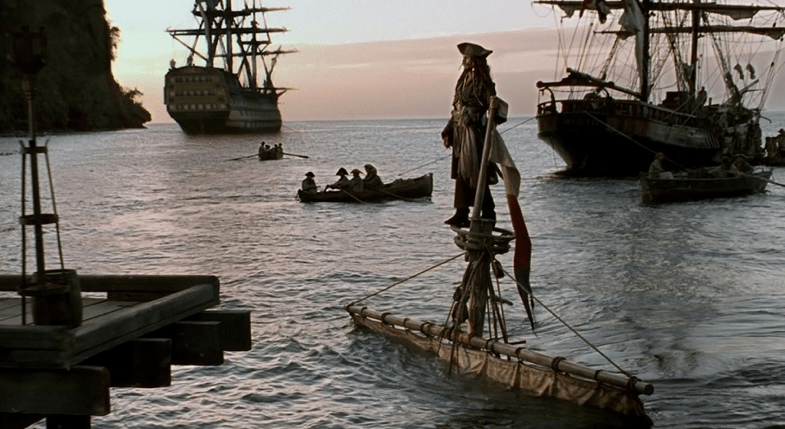
Pirates of the Caribbean: The Curse of the Black Pearl, directed by Gore Verbinski

The Conflicting Magical And Material Worlds

In Pirates of the Caribbean: The Curse of the Black Pearl, Jack Sparrow is introduced as a captain without a ship who sails aimlessly in a sinking boat. Using his cherished compass, the infamous pirate is guided towards what he desires most, to navigate freely beyond the horizon without a destination. Throughout his story, Jack Sparrow embarks on perilous voyages in a constant chase to recover his beloved ship. For the notorious pirate, commanding the Black Pearl means being the master of his destiny. Aboard his ship, Jack Sparrow can search for adventures in the unknown world beyond the horizon, crossing the seven seas to explore the blank edges of the map. Whilst drunk on an island in Pirates of the Caribbean: The Curse of the Black Pearl (2003), Jack Sparrow expresses the significance of his ship: “Wherever we want to go, we go. That’s what a ship is, you know. It’s not just a keel and hull and a deck and sails. That’s what a ship needs. But what a ship is… what the Black Pearl really is… is freedom.” With these words, the character exposes his irony as a pirate who doesn’t seek fortune by plundering ships but reveals a mariner whose most treasured possession is his freedom to sail whenever and wherever he pleases.

Using his compass, Jack Sparrow traverses through the magical world of chaos inhabited by pirates such as Hector Barbossa aboard the Black Pearl and Davy Jones aboard the Flying Dutchman, who terrorize any hapless ship they encounter. Nevertheless, these pirates navigate at the mercy of the goddess Calypso and the monstrous Kraken, who reign over the fantastical realm of the seven seas. Despite Jack Sparrow’s terror of confronting rival pirates and mythical beings, his greatest fear doesn’t emerge from the magical world of chaos but from the material world of order. Through the East India Trading Company, Jack Sparrow’s freedom to be the master of his destiny is threatened, with Lord Cutler Beckett filling the blank edges of the map and ending the Age of Exploration by claiming dominance over the seven seas for the civilized realm of Great Britain’s imperial interests.
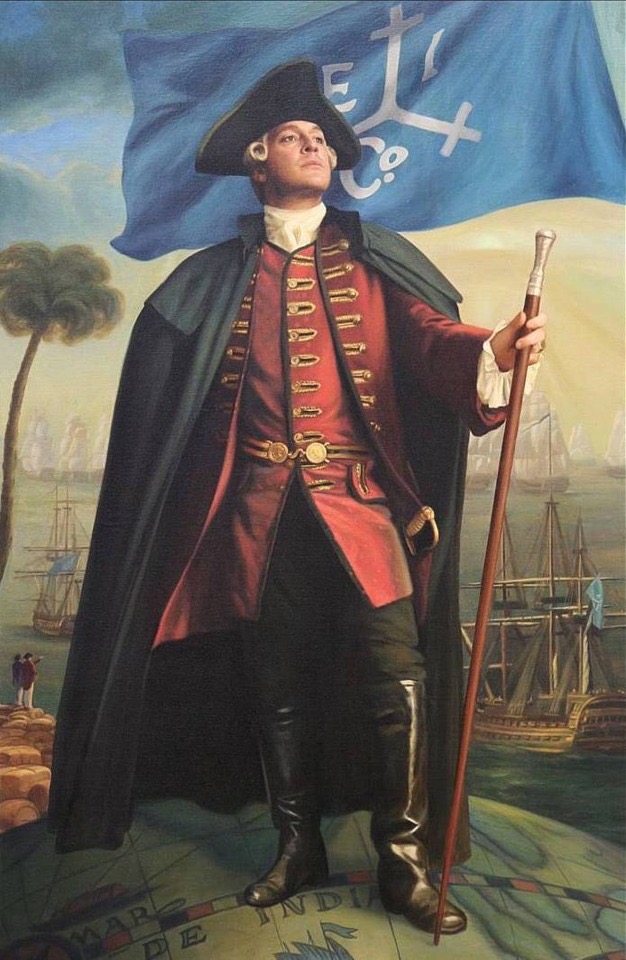
Pirates of the Caribbean: At World’s End, directed by Gore Verbinski

Opposing Jack Sparrow’s fantastical realm of chaos with the Black Pearl is Lord Cutler Beckett’s civilized realm of order with the East India Trading Company. Sailing aboard the Endeavour, this feared commander secludes himself in his cabin with a prized map of the world, designing a strategy to submit the magical world to his vision of a material world. Consequently, Jack Sparrow’s freedom in the new civilized realm becomes a threat to Lord Cutler Beckett because of his inability to exert dominance over him in the old fantastical realm. In Pirates of the Caribbean: Dead Man’s Chest (2006), Lord Cutler Beckett reveals his perception of the infamous pirate: “Jack Sparrow is a dying breed. The world is shrinking, the blank edges of the map filled in. Jack must find his place in the new world or perish.” With these words, the character divulges his prideful ambitions to eradicate the Age of Piracy and surface the Age of Industrialization, allowing him to govern the seven seas. However, Lord Cutler Beckett believes himself to be a just leader who shields and spreads the material world of order by structuring the unknown. Instead, this feared commander is a tyrannical ruler who crushes and restrains the magical world of chaos by oppressing the freedom of pirates to be masters of their destiny. Therefore, the East India Trading Company enslaves Davy Jones and executes the Kraken to mop up any threat from the fantastical realm that can contest their power over the seven seas in their self-imposed civilized realm.

Posted in Film and Literature Analyses

Sailing to Byzantium

By: Bryan Ricardo Marini Quintana

(Rembrandt, The Storm on the Sea of Galilee, 1633)


In the poem, “Sailing to Byzantium”, poet William Butler Yeats narrates a spiritual journey of the body’s decay whilst the soul rejuvenates. At the start a voice says: “That is no country for old men…” (Yeats). Through these words, the poet makes it clear that those of old age are neglected by the boats that carry mortals to Byzantium. Instead, the gift of sailing to this majestic city is bestowed upon those with a youthful essence. Afterward, the voice presents how the younger mortals are like “…birds in the trees…” (Yeats), who sing and enjoy life with ecstasy. However, “…Those dying generations…” (Yeats) don’t share this festive sentiment with their dry voices that aren’t able to sing joyful melodies anymore. In a pessimistic manner, the poet says: “Whatever is begotten, born, and dies. / Caught in that sensual music all neglect / Monuments of unageing intellect.” (Yeats). These key lines unveil how old men have been relegated from society, due to their decrepit state and pessimistic nature. What these lines reveal, is the refusal of the voice to allow what energy is left within his soul to dwindle. Evidently, the poet shows his fears of dying and being forgotten, unveiling that although there is a youthful spirit within, the body is continually waning. Withering with old age, the voice longs to reach the city of Byzantium to be free of his mortal confines. By keeping his soul joyful with the melodies of life, the voice has been granted passage to the city of Byzantium. Therefore, the poet prepares for the journey, with an unwavering resolution to let go of his decaying body and travel to a city that will rejuvenate him. Hence, guided by the singing of birds that call unto him to make the journey, the voice leaves the mortal world and sails towards Byzantium, choosing to reach this eternal city, where beings through joyful melodies don’t age, rather than stay amidst wrinkled bodies clinging unto pale souls, meeting his fate.

Reaching the shores of the majestic city of Byzantium, the poet describes his journey’s end. Immediately, the poet depicts the city as Holy, a structure that had withstood the winds of change, still standing as a pivotal beacon of importance throughout the years. In here, the historical significance of the city plays a pivotal role in why the poet chooses to travel specifically towards this destination. Evidently, throughout history this city has acquired importance to the Greeks and Persians. Even beyond, The Macedonian Empire, The Roman Empire, and The Ottoman Empire recognized not only its benefiting strategic location but the cultural significance it carried. This reveals how across various civilizations and nations that have risen and fallen, the city has withstood throughout years, embodying a symbol of cultural pride. For these reasons, William Butler Yeats chooses to sail in a spiritual journey of rejuvenation to this unageing city. Therefore, this makes Byzantium the ideal city for the poet to visit as the strength of his body wanes but that of his soul is filled with energy. Allowing for the frail voice to be rejuvenated by reaching a city that throughout history has withstood as a haven of art and immortality.

Afterward, the poet reaches the city and says: “O sages standing in God’s holy fire / As in the gold mosaic of a wall, / Come from the holy fire, perne in a gyre, / And be the singing-masters of my soul.” (Yeats). With these words, the voice describes the city as an entity of its own. Alongside, this entity is either blessed by a divine being or is the manifestation of a divine being. Thereafter, the poet is at the gates of the city and is received by angelic voices that sing a melody that rekindles his soul. Although the decaying state of his body would have left the doors shut, due to the joyful melody within his soul, the voice is granted entrance. Onwards, the poet describes the beauty of the song and how it has awakened his soul, with the essence of the voice being filled with a rejuvenating chorus that welcomes him into the city.

Once inside, the poet describes the end of his journey by saying that now in the city he can be free from mortal constraints. “Once out of nature I shall never take / My bodily form from any natural thing,” (Yeats). With these lines, the poet rejects the limitations of a human body and begins to let go of wrinkled flesh that clings unto a glistening soul. By getting rid of what limits him, an aged body that ties the voice to the mortal world, the process of rejuvenation may begin. Thereafter, the poet lets go of his mortal form to transcend mortality and reach immortality. This change from a mortal man to what can be comprehended as a transformation into art itself, is shown when the voice says: “But such a form as Grecian goldsmiths make / Of hammered gold and gold enamelling” (Yeats). Now, the poet has unveiled his greatest desire, wishing to become art. This will make the voice a part of what comprises the city of Byzantium, allowing him to live on forever. In order to become art, the poet describes the process of a Grecian goldsmith that will give him a new form that will immortalize the poet. With this new form, the voice will become a part of Byzantium that can be admired throughout history, by saying: “To lords and ladies of Byzantium / Of what is past, or passing, or to come.” (Yeats). In these final words, William Butler Yeats reveals his true intentions, with a desire to become art being fulfilled due to the soul that remained joyful and sought to sail towards the city, as Byzantium embraces him with melodies and grants the voice a wish to become immortal by transforming the poet into art that can be admired forever.

Works Cited:

Butler Yeats, William. “Sailing to Byzantium.” 1928. Poetry Foundation,
https://www.poetryfoundation.org/poems/43291/sailing-to-byzantium

Posted in Film and Literature Analyses

The Author to Her Book

By: Bryan Ricardo Marini Quintana

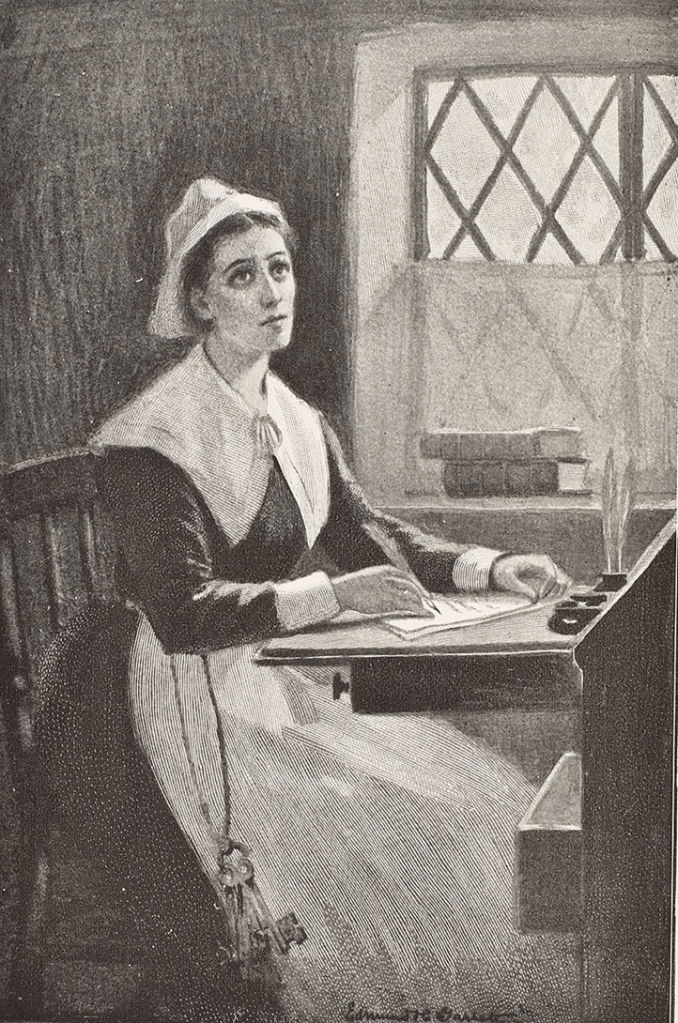
(Edmund H. Garrett, Nineteenth century depiction of Anne Bradstreet)


In “The Author to Her Book”, poet Anne Bradstreet writes of an intimate relationship between herself as a creator and the text as the creation. This brings the element of family into the poem, giving Anne Bradstreet and the text a relationship akin to that of a mother with her child. At the start, the text is granted life and a consciousness of its own through the writer, as Anne Bradstreet says: “Thou ill-form’d offspring of my feeble brain,”. What the poet expresses here is how the text derives its essence of being and consciousness from the mother. Afterward, Anne Bradstreet shows that as a writer, her creation is like raising a child. Throughout the poem, the descriptions bear similarity to a relationship between a mother and her child, as the writer gives birth to the text to then mold it. This way, Anne Bradstreet sees the text as a part of herself, saying: “Who after birth didst by my side remain,”. However, a time will come when the mother must let go of her child, as the text becomes detached from the writer. Outside of the writer’s protective bubble, the text will be judged. “Till snatched from thence by friends, less wise than true,” (Bradstreet). With the text taken away from the author, now it isn’t under her care anymore and must face the masses in an exposed state to be embraced or rejected. This makes the mother or writer come to terms with her limitations as a creator, realizing she must let go of the text no matter how difficult it may be, allowing her child to face an audience who will either accept it or disregard it.

Further on, the creator faces a dilemma as the audience judges harshly her creation, making Anne Bradstreet grow dissatisfied with the text, as public opinion influences how the mother now sees mistakes in her child. “I cast thee by as one unfit for light,” (Bradstreet). These are the words of a mother in pain, seeing her child get scrutinized by the public. This is why, she acts on maternal instincts and seeks to shed the light away from her mistreated child, so that it may not be judged. Alongside, Anne Bradstreet is faced with the predicament of an artist never truly finishing her work, as she now sees imperfections that must be amended. “Thy Visage was so irksome in my sight;” (Bradstreet). Even now, the poet grows judgmental of the text, turning against her own creation. Here, there’s a clever play of words, with the poet describing how the text cannot see light, the public light, yet the writer can’t bear to see it as well, so it must get out of her sight. This is a drastic change in tone that occurs in the poem, showing how the motherly love and protection are fading away, with the creator sharply criticizing the text, her own child.

However, in the next two lines, after what appeared to be a furious fit of frustration, Anne Bradstreet returns to her motherly love and affection for her child, the text. “Yet being mine own, at length affection would” (Bradstreet). Even though the text has been judged, it’ll always have a home in the heart and mind of the writer. With comforting words, Anne Bradstreet soothes the text: “Thy blemishes amend, if so I could:”. Afterward, it appears that the writer wishes to reshape her creation to improve it. “I wash’d thy face, but more defects I saw,” (Bradstreet). In here, Anne Bradstreet desperately attempts to fix her child, yet only finds out that perhaps she is only tampering with it. “And rubbing off a spot, still made a flaw.” (Bradstreet). The various attempts to edit her unwanted and imperfect child fail to mend the text, with the poet saying: “I stretched thy joynts to make thee even feet,” (Bradstreet). However, the mother isn’t able to make the text stand properly, as Anne Bradstreet says: “Yet still thou run’st more hobling then is meet;”. In here, the poet compares the book to a child, trying to make its feet even, so it can stand properly and not stumble, yet any attempt to make it stand straight is folly.

Finally, the writer comes to terms with her text, accepting that it has already been exposed to an audience and that any attempt to change it would only damage her creation. Then the mother releases the child from her grasp saying: “In this array ’mongst Vulgars mayst thou roam.” (Bradstreet). Now, the writer embraces the judgment her text will receive once again when it is released out into the public view. “In Criticks hands, beware thou dost not come;” (Bradstreet). However, this time the mother is ready to let her child go, knowing an artist’s work is never finished, she allows creation to roam freely away from the creator. “And take thy way where yet thou art not known,” (Bradstreet). Hence, poet Anne Bradstreet brings to the forefront of the poem a relationship between writer and text, which in her eyes is akin to that of a mother and child, as she learns to mold it, take care of it, and let it go.

Works Cited:

Bradstreet, Anne. “The Author to Her Book.” 1650. Poetry Foundation,
https://www.poetryfoundation.org/poems/43697/the-author-to-her-book