
By: Bryan Ricardo Marini Quintana
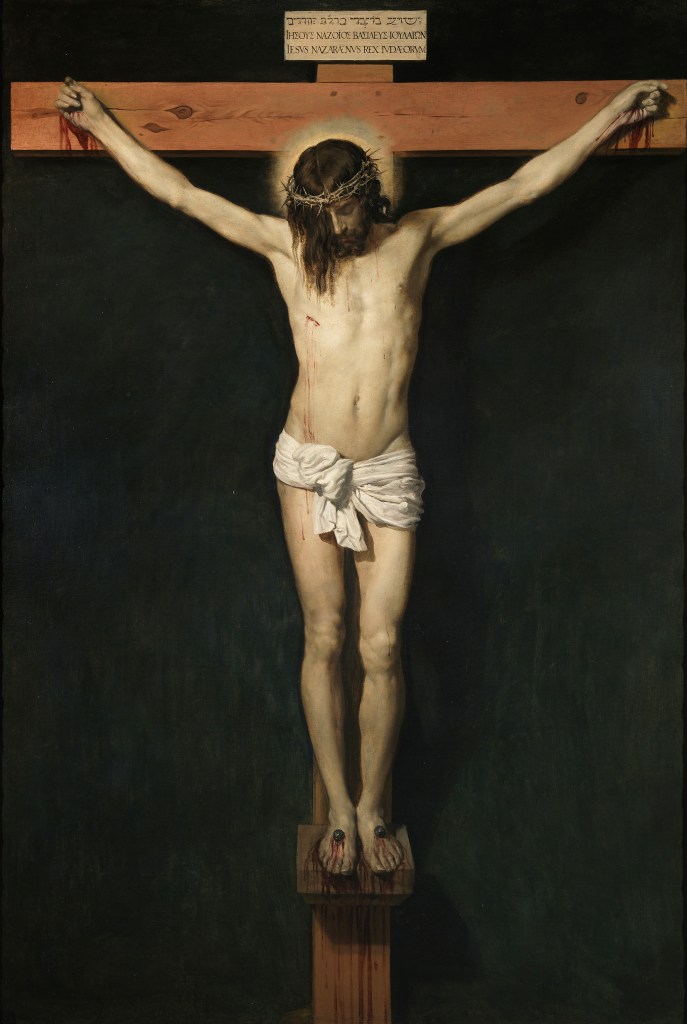
The Gospels of Matthew, Mark, Luke, and John recorded the account of Christ’s Crucifixion in 33 AD during Passover around the late 60s AD at the earliest, until the early 100s AD at the latest, ranging across 40 to 70 years after Jesus’ Death, with this festival celebrating the Israelites’ Exodus from Egypt on the 15th of Nisan in the Jewish Calendar. Additionally, the Historians Cornelius Tacitus (56-120 AD) in The Annals and Flavius Josephus (37-100 AD) in The Antiquities of the Jews wrote external reports in the 1st and 2nd century AD from a Roman and Jewish perspective of the event. Firstly, Tacitus asserted in Book 15 that Christ was Crucified during the reign of Emperor Tiberius (42 BC-37 AD) between 14 to 37 AD and that the population referred to his followers as Christians, who Emperor Nero (37-68 AD) blamed for the Great Fire of Rome in 64 AD. Secondly, Josephus commented in Book 18 that Jesus declared himself the Messiah by achieving miraculous feats. Both resonate with the New Testament’s Gospels when these Historians mentioned Christ’s Crucifixion at the hands of Pontius Pilate, a governor of the Roman Province of Judea from 26 to 36 AD.
On one side, Matthew 27, Mark 15, and Luke 23 concurred that Jesus died on the 15th of Nisan, but John 19 stated instead the 14th, a day before Passover. Early Christians believed the 14th of Nisan corresponded with Christ’s Condemnation on the Cross, converting the date for the Julian Calendar (Introduced by Julius Caesar in 45 BC) into roughly March 25th. Correspondingly, the 14th or 15th of Nisan ranges from March to April 25th in the Gregorian Calendar (Reformed by Pope Gregory XIII in 1582 AD). Since Jesus was Crucified on a Friday near Passover around 33 AD, according to the Julian Calendar, the 15th of Nisan would correspond with the 3rd of April. However, in the Gregorian Calendar, the day would fall instead on the 7th of April. By identifying the Gospels’ dating and the Early Christians’ beliefs, the Messiah’s Death occurred on March 25th. When combining this with the Ancient Jewish Tradition of Prophets such as Moses fulfilling the ‘Integral Age,’ then Christ must’ve been Conceived the same day he was Crucified. This means that the Annunciation of the Angel Gabriel happened on March 25th, and Mother Mary bore God’s Son to give birth 9 months later, around December 25th. Overall, when accessing the New Testament’s Gospels, the Ancient Judeo-Christian Traditions, the Theologians of Early Christianity, and External Sources from Historians of the Period, the evidence concludes that Jesus’ Birthday is on December 25th.
Dear reader, enjoy the holidays with your families and remember to take some time off to commemorate the Birth of Christ. The Western Voyager wishes you a Merry Christmas, a Happy New Year, and a Cheery Feast of the Three Kings! Thank you for reading this Series on the Christian Roots of Christmas. To explore more research articles, make sure to visit the website and subscribe to the newsletter!

 The Western Voyager