
By: Bryan Ricardo Marini Quintana

Early on, Lucilla travels alongside Commodus to visit their father, feeding her brother’s egomaniacal aspirations of becoming Emperor as she is incidentally imprisoned by his obsessive devotion to her. At the feast, Commodus intimidates Maximus by implying that he’ll call him to serve Rome again, mentioning how his sister still remembers him fondly when he shares in a jealous tone: “Lucilla’s here, did you know? She’s not forgotten you, and now you’re the great man.” (Gladiator 2000) Meanwhile, Lucilla sneakily glimpses at the festivities, intently watching the General when Marcus Aurelius catches her and gladly comments: “If only you had been born a man, what a Caesar you would’ve made.” (Gladiator 2000) They proceed to kiss on the cheek, with the Emperor testing her similarly as he does with Maximus by adding: “You would’ve been strong. I wonder, would you have been just?” (Gladiator 2000) Lucilla rightfully answers: “I would’ve been what you taught me to be.” (Gladiator 2000) Altogether, the conversation shows how they speak earnestly and embrace each other lovingly with an esteem of mutual respect. Finally, Marcus Aurelius smiles at her, proud of the astute woman he’s raised, while rejoicing in the company of his lovely daughter.
Later, Lucilla reunites with Maximus, goading him about her luxurious life in the marble palaces of Rome ever since he was mustered to fight far away in the Roman Frontier. Despite their long absence, an old flame still sparks between them. They demonstrate a sense of duty and paternal love to protect their children, which binds these estranged souls together again. Soon, news reaches Lucilla about her father’s death, and she straightaway rushes to read her brother’s face, reasoning from his cold demeanor that he is responsible for this foul deed. She slaps him in a fit of grief and anger but realizes that Maximus has been sentenced to suffer the same fate. Subsequently, Lucilla succumbs to Commodus and recognizes him as Emperor while she plots to restrain her brother’s impulsiveness with her allure.
Once Commodus becomes Emperor, he is received as a conquering hero whose arrival in Rome is celebrated with a triumphant parade. He proceeds to throw a tantrum in the Senate when the politicians scold him for his lack of sympathy and familiarity in resolving the People of Rome’s plights. Repeatedly, Lucilla supports her brother’s maddening schemes, beginning with a return to gladiatorial games in the Colosseum. This violent sport that their father outlawed now promises to gain Commodus the masses’ jubilation. However, the Emperor envisions delusions of grandeur by dissolving the Senate and holding absolute power over the People of Rome, as Lucilla grasps that she does not influence her brother. Evermore, Commodus secludes himself from the world and clings to his sister for the affection he desperately needs. She is confined alongside her son under duress, with the Emperor threatening to harm Lucius if Lucilla doesn’t consent to his advances. But Commodus disregards their appeals, struggling to preserve his last bond with mankind before he becomes isolated from society. Consequently, the once glamorous halls of Rome transform into four walls that close in around her, forcing Lucilla into an abusive and incestuous relationship with Commodus.
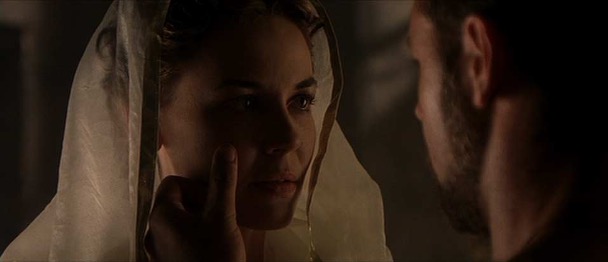
Afterward, Lucilla desperately seeks out Maximus to secure the future of the Senate and the People of Rome. She discovers that he survived and now fights as a slave in the gladiatorial games. The Gladiator initially turns her away, holding Lucilla accountable for his family’s fate and backing her brother’s rise to power. Although Lucilla is held captive by Commodus’ lustful fixation, her pleas don’t come from a selfish need. Instead, her duty and love as a mother drive Lucilla to find him in a last effort to save Lucius’ life. At first, Maximus hesitates to answer her call for help and feels he has nothing else to lose. His only pursuit is a swift death in the Colosseum to be reunited with his wife and son in the fields of Elysium. Nevertheless, Lucilla encourages him with a profound appeal to assume responsibility, prompting him to uphold the stoic ideals of their father by restoring the Roman Republic. This reminds the Gladiator of his oath to Marcus Aurelius, envisioning an opportunity to avenge his family and rescue her son.
Then, Maximus comforts Lucilla as she not only entrusts the safety of Rome and Lucius to him but also confesses her emotions wholeheartedly. They find solace in each other’s company, reminiscing with affectionate glances about their hidden feelings. Further on, warriors and senators alike plot with them to overthrow the Emperor by freeing the Gladiator from the pits of the Colosseum. Once he’s smuggled out of the city, Maximus will command the loyalty of his Roman Legionaries to march on Rome and restore the Republic. Yet Commodus foils their plan and confines Maximus back into the arena for a final match against himself in a rigged spectacle for the crowd. Eventually, Lucilla is held captive by his side, forced to watch her beloved struggle till death claims him in the Colosseum, where the mob gathers to witness a Slave defy an Emperor in the contest of the century that will decide Rome’s fortune.

 The Western Voyager